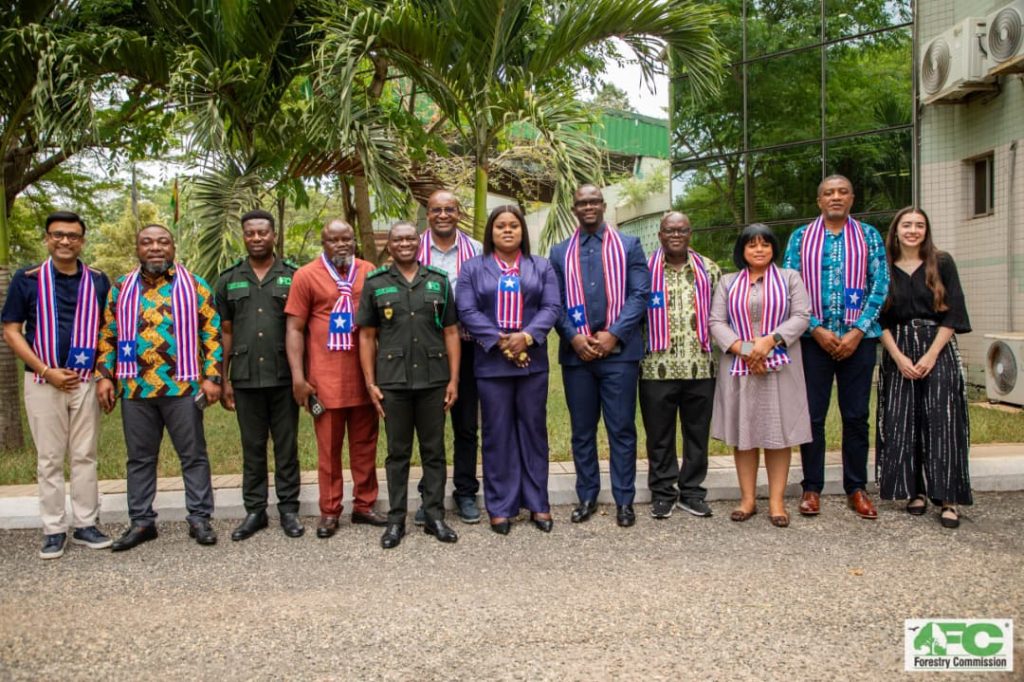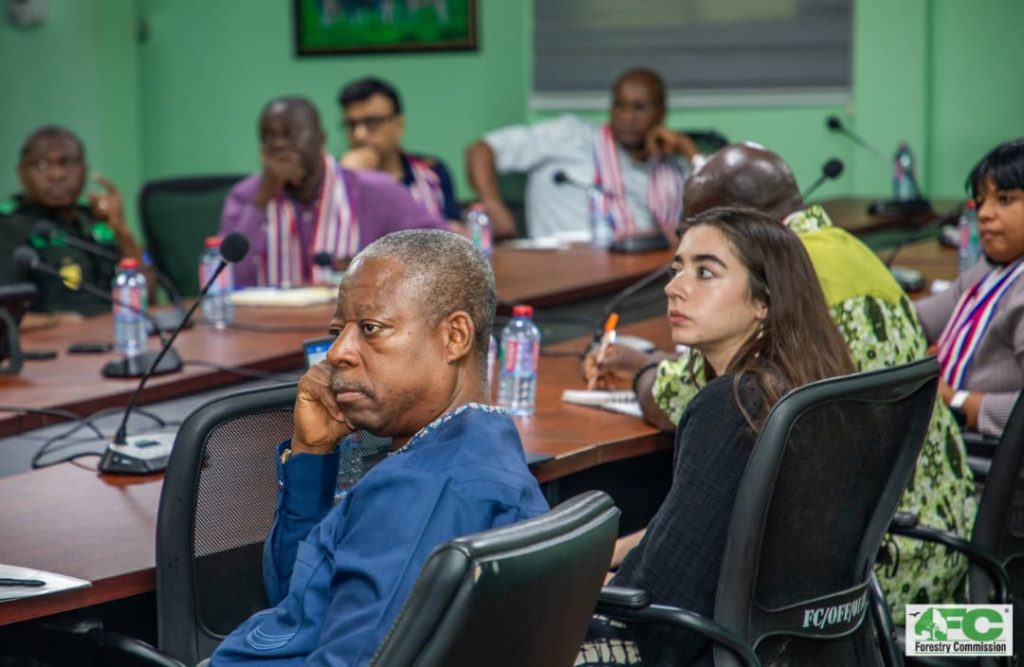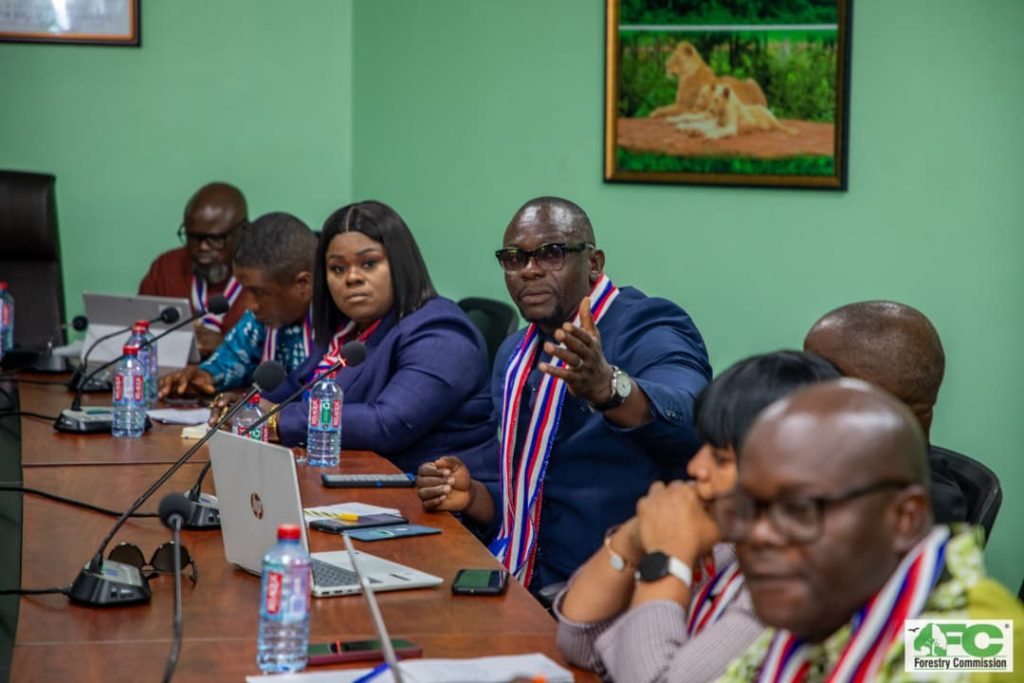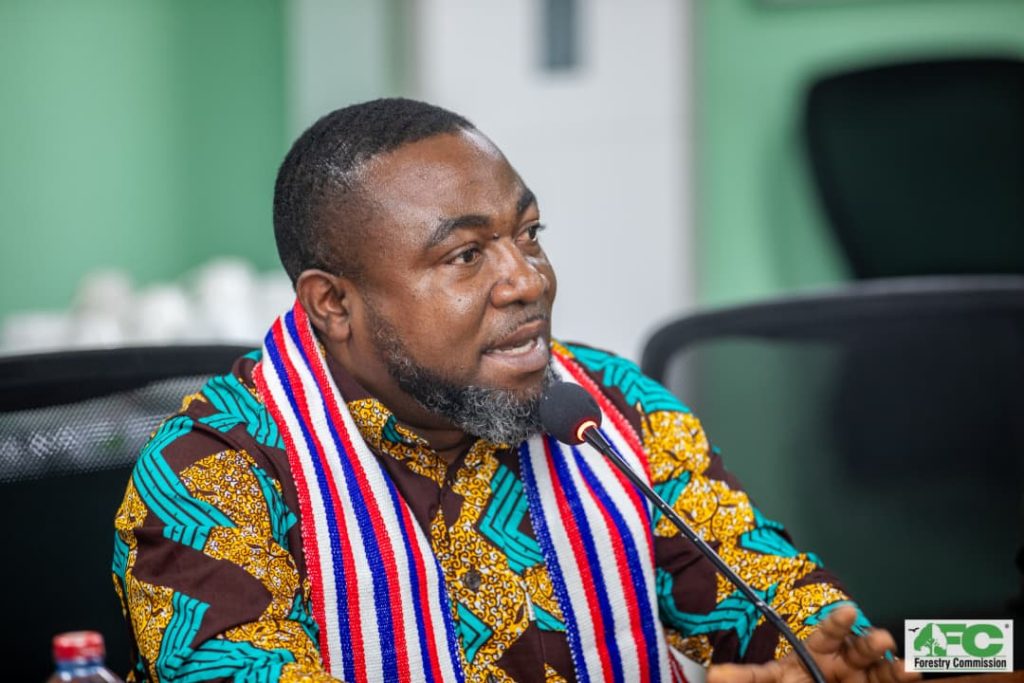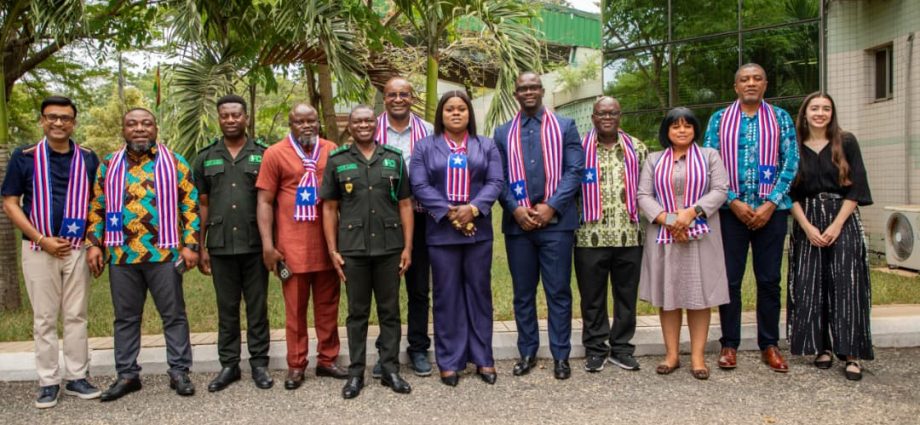
A delegation from Liberia’s Forestry Development Authority (FDA) has paid a working visit to the Forestry Commission (FC) of Ghana to understudy the implementation of Public-Private Partnership (PPP) models within the forestry and wood processing subsector.
The delegation was received by the Executive Director of the Timber Industry Development Division (TIDD), Dr. Richard Gyimah, who represented the Chief Executive of the Forestry Commission, Dr. Hugh Brown. Dr. Gyimah welcomed the delegation and reaffirmed the Commission’s commitment to knowledge sharing, particularly in the area of Public-Private Partnerships within the forestry sector.
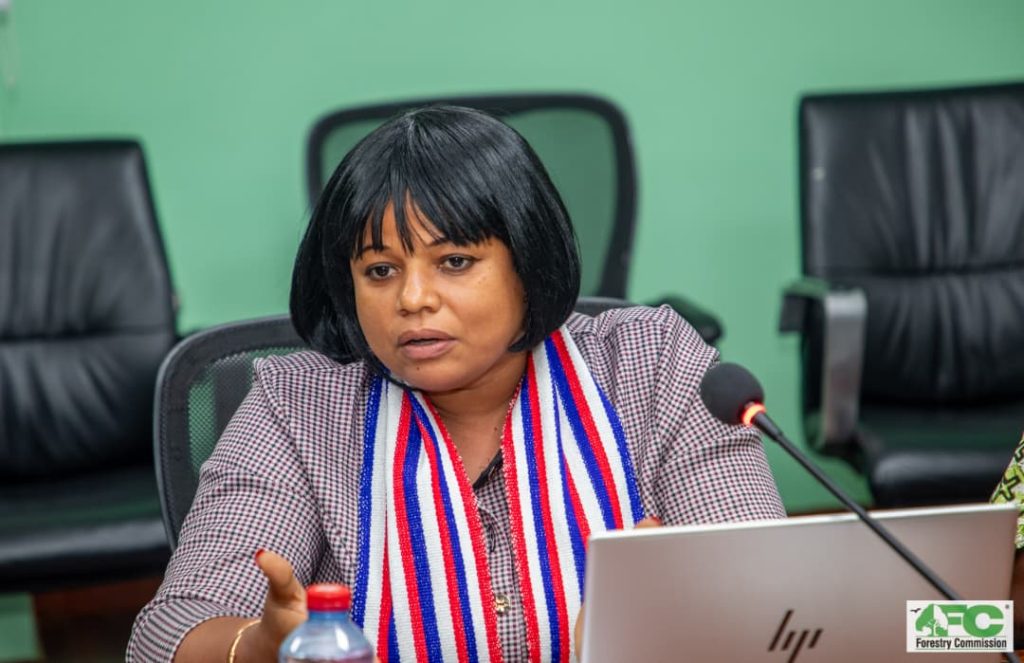
Speaking on behalf of the delegation, the Deputy Managing Director of the FDA, Madam Gertrude Wk. Nyaley, expressed appreciation to the Forestry Commission for the warm reception and willingness to share expertise. She explained that the FDA is currently collaborating with the World Bank on the preparation of a Forestry Economy Project aimed at stimulating inclusive economic growth within Liberia’s forestry sector.
According to Madam Nyaley, a key component of the project is the establishment of a Public-Private Partnership (PPP) sawmill to enhance domestic wood processing capacity, create employment opportunities, and reduce the export of unprocessed round logs. She noted that the FDA is seeking the support of the Forestry Commission to assess the operations of PPP sawmill facilities in Ghana and to gain practical insights into PPP models, governance arrangements, financial structures, institutional frameworks, and the broader wood processing subsector.
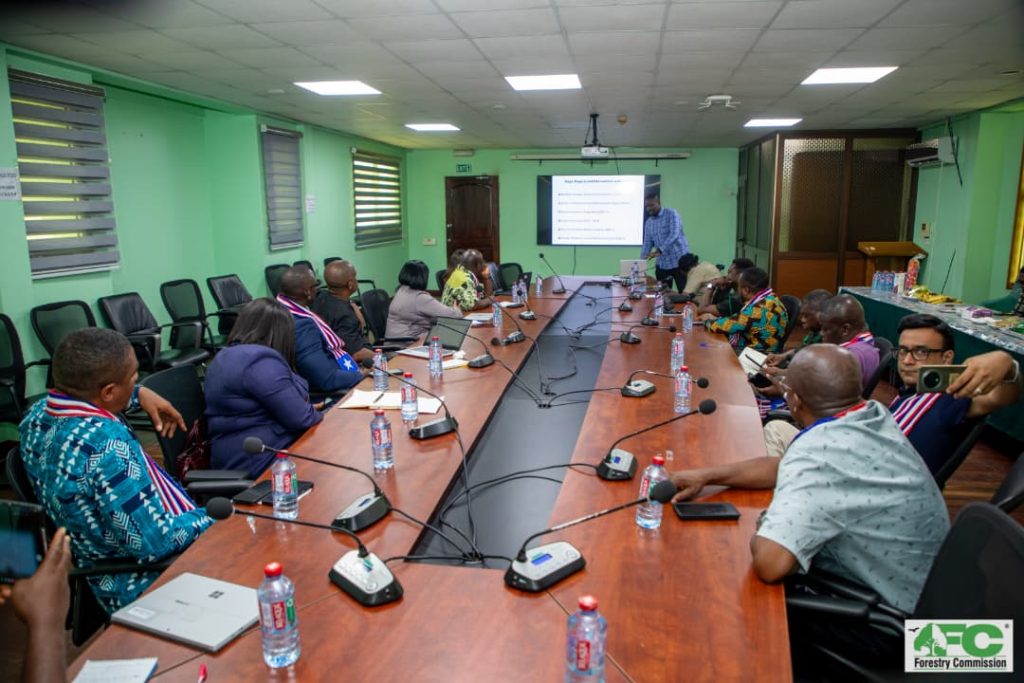
As part of the engagement, Mr. Kwame Agyei, Plantations Investment and Extensions Manager, delivered a presentation on the Commission’s mandate and the role of the private sector in forest plantation development in Ghana. The presentation provided an overview of the Forestry Commission’s legal status, organisational structure, mission and vision, divisions and their key functions, as well as the historical overview of development of forest plantations in Ghana. He also highlighted major projects and interventions, private sector participation under the Ghana Forest Plantation Strategy (GFPS), and challenges faced by private sector actors.
In his remarks, Dr. Gyimah noted that Ghana does not currently operate the specific PPP sawmill model being considered by Liberia. He explained that while the Liberian government intends to use loan financing to support the project, Ghana’s approach focuses on creating an enabling environment for private sector participation rather than directly providing equipment. He advised the delegation to take time to thoroughly understand the relevant sectors that will directly impact the project to ensure effective implementation of the project.
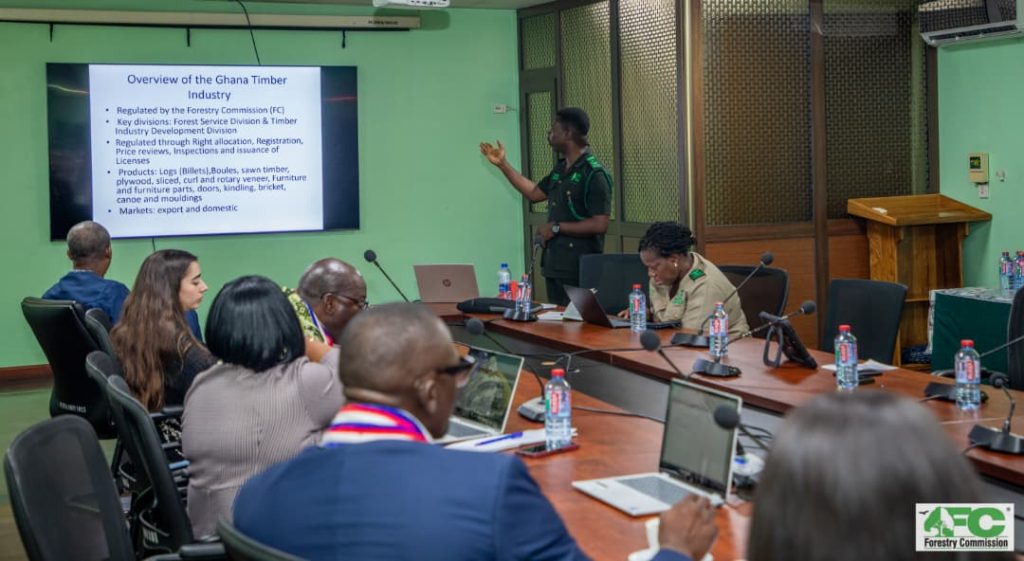
Another presentation was delivered by Mr. Eric Abbeyquaye a Manager at TIDD, who provided a practical overview of how the Forestry Commission engages private partners in timber harvesting, processing, and export. His presentation covered Ghana’s timber industry, production outputs, domestic and export markets, registration requirements for sawmills, plymills, veneer mills, moulding mills, furniture manufacturers, canoe manufacturers, retail traders, and export traders. He also outlined key challenges facing the industry and opportunities for improvement.
The meeting was further enriched by contributions from Mr. Sanjay Poddar, a private timber contractor operating in Ghana, Liberia, Nigeria, and Singapore. Representing Krish Veneer Industry Inc. and Star Agro Forestry Ghana Ltd., Mr. Poddar shared practical insights on plantation development, including the cultivation of different timber species with varied growth cycles to support sustainable harvesting, processing, and export. He also highlighted challenges encountered by private investors in the sector.
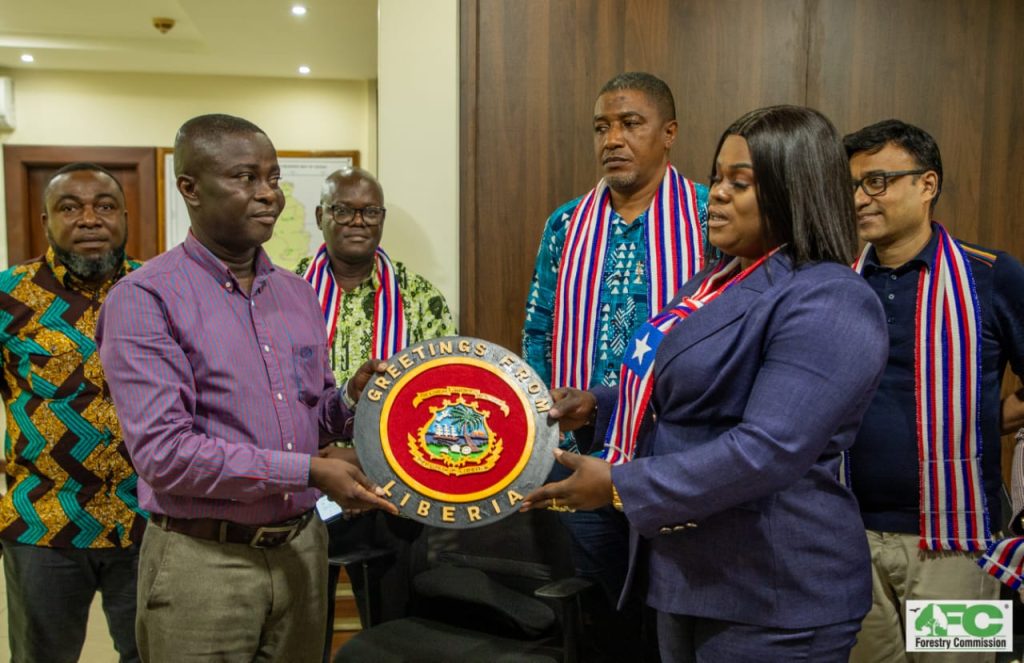
At the close of the visit, the Liberian delegation presented souvenirs, including plaques and sashes, to the Executive Director of the Forest Services Division (FSD), Dr. Gordon Safo Adu, Mr. Frank Ankomah, and Mr. Kwame Agyei, in appreciation of their support and knowledge sharing.