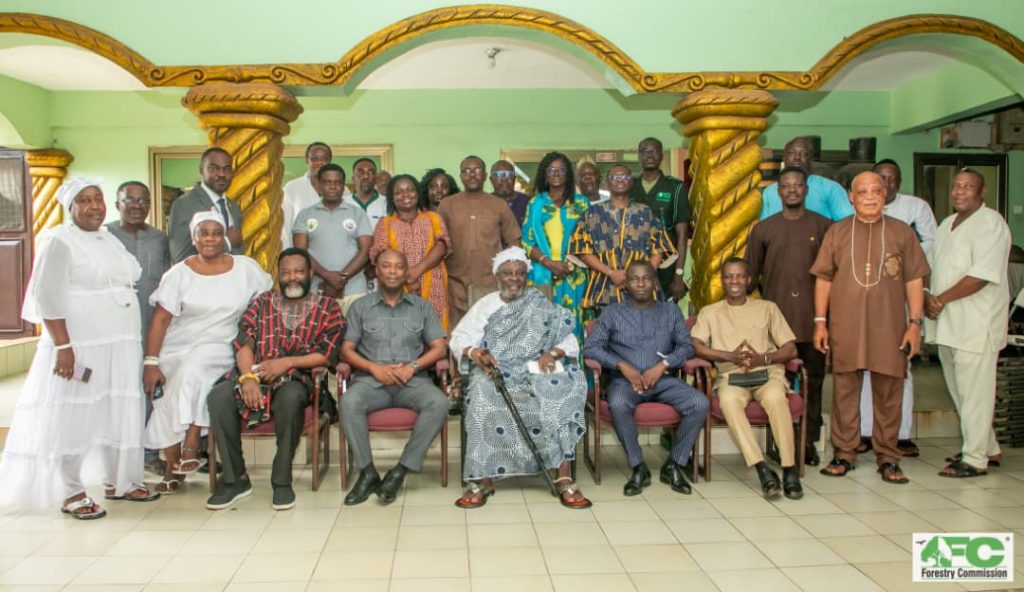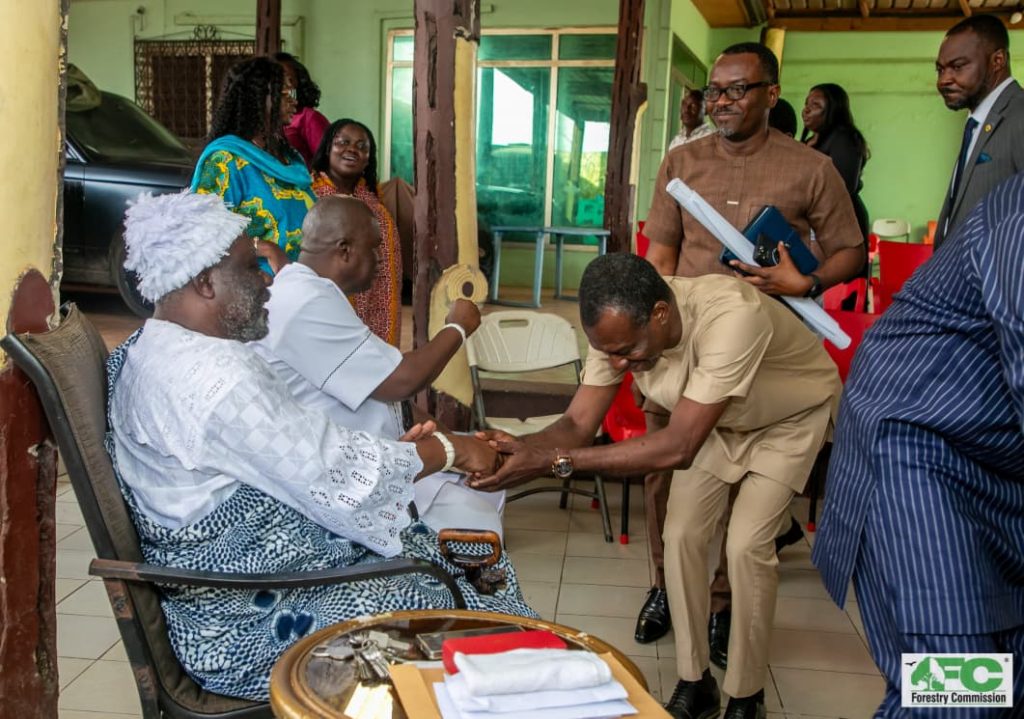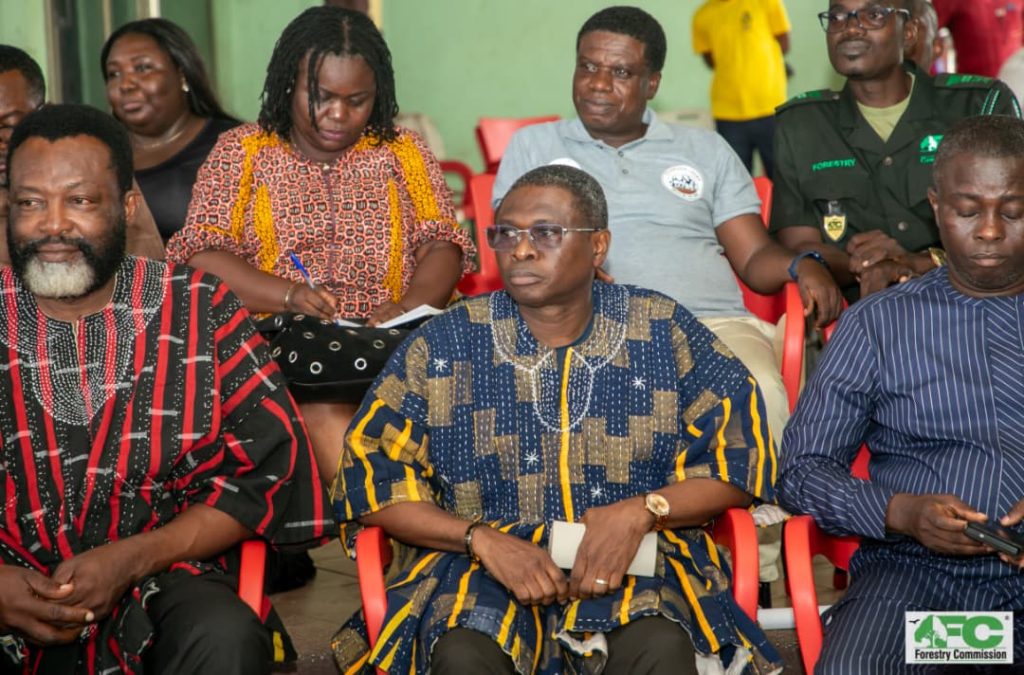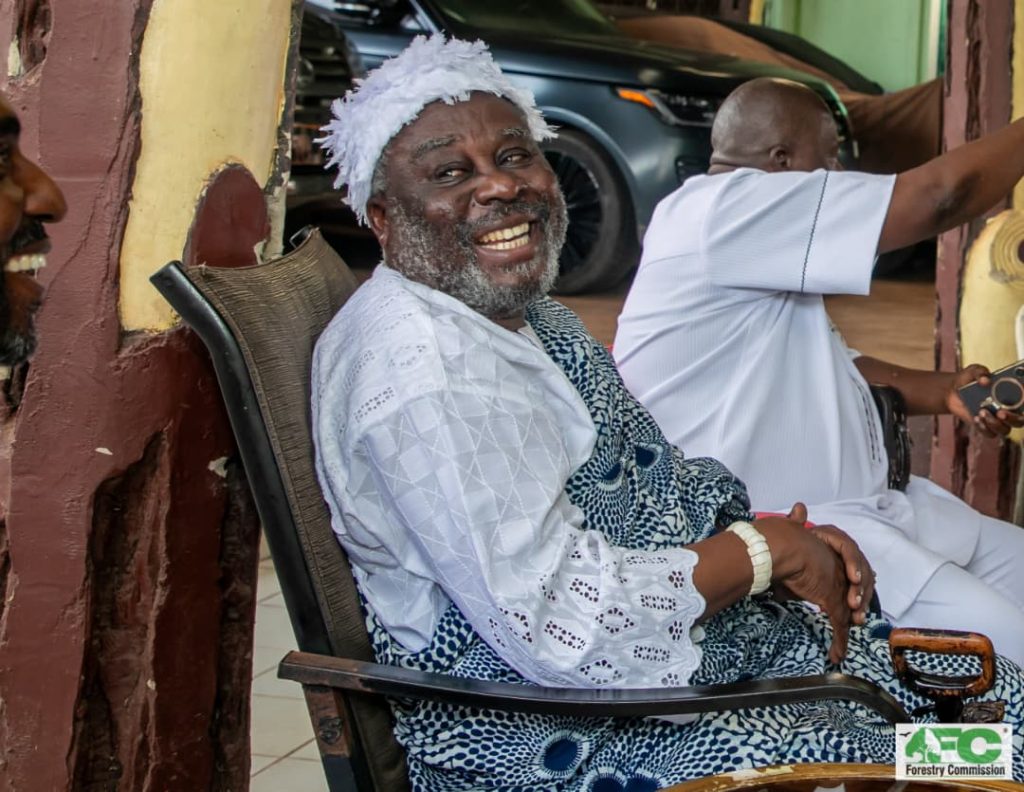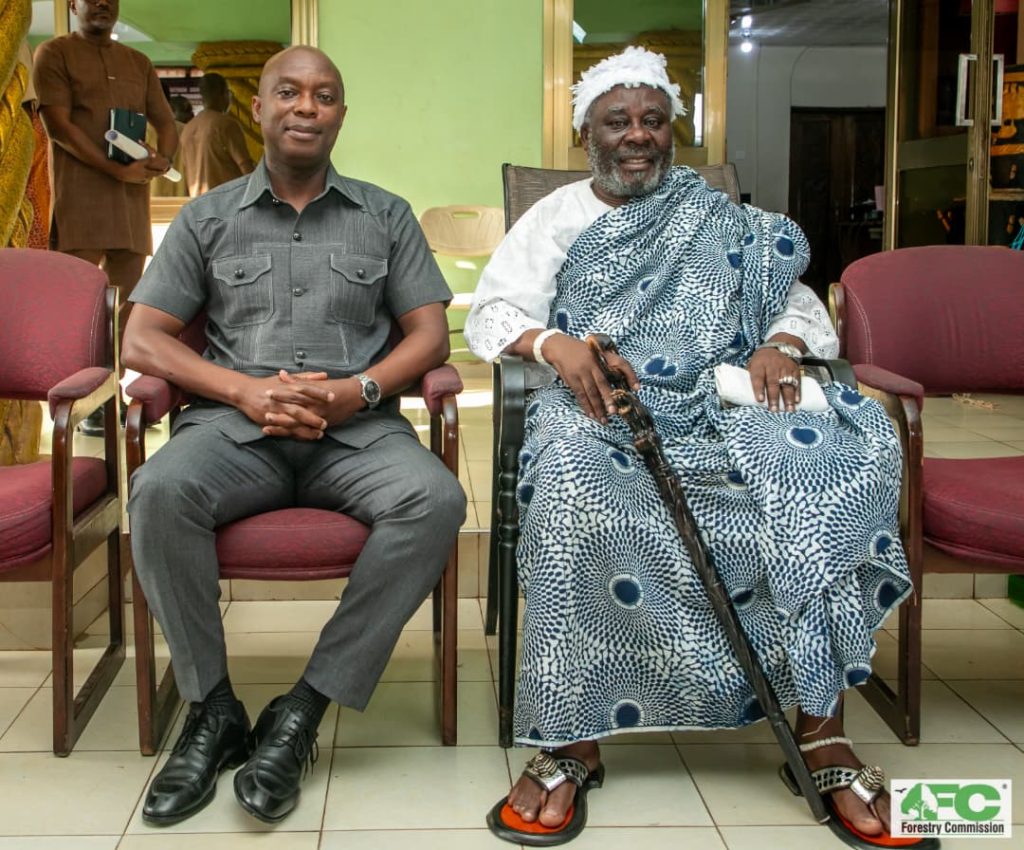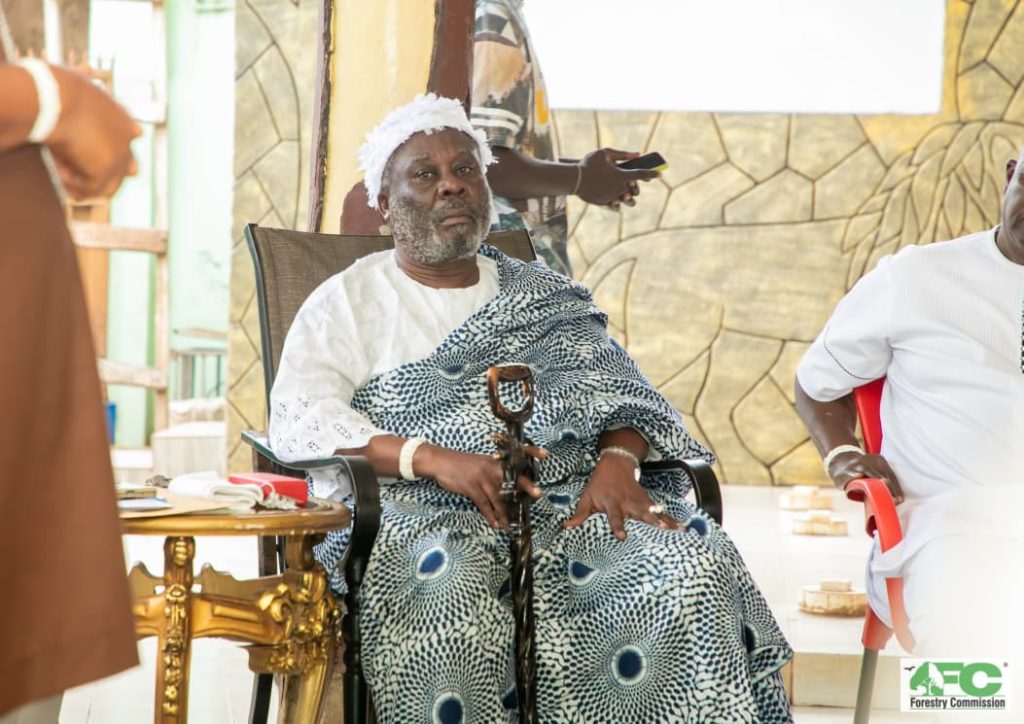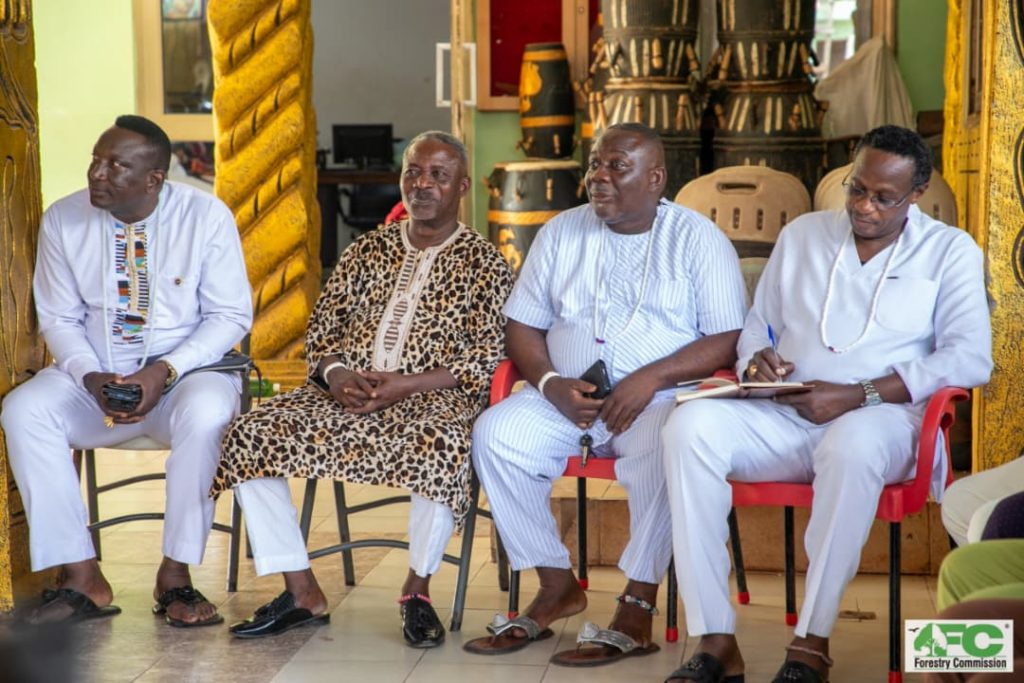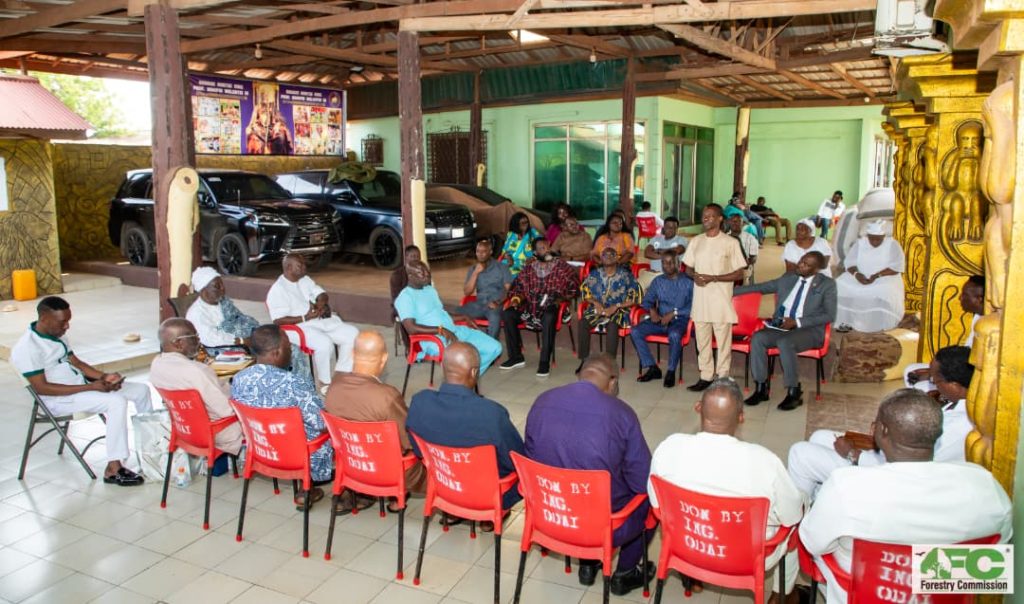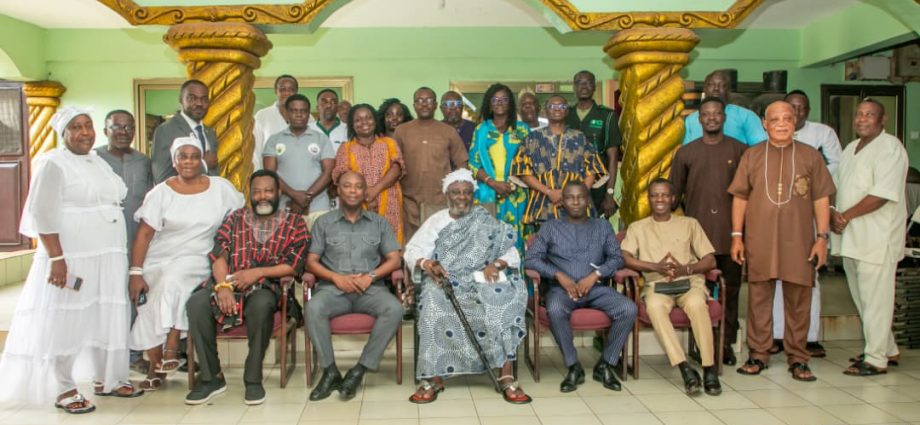
The Forestry Commission (FC) has engaged the Nungua Traditional Council in a consultative meeting to strengthen the protection of the Sakumo Ramsar Site.The meeting, held at the Paramount Chief of the Nungua Traditional Area’s palace brought together several high-ranking officials of the FC and chiefs of the area that make up the Traditional Council. The engagement sought to discuss strategies for safeguarding the internationally significant wetland from encroachment.
The FC delegation was led by the Chief Executive , Dr. Hugh Brown. It also included the Acting (Ag.) Deputy Chief Executive, Hon. Timothy Ataboadey Awontiirim; Director, Legal Unit, Mr. Dennis Osei-Hwere, Esq.; Executive Director (ED), Wildlife Division (WD), Dr. Joseph Boakye, Esq; ED, Timber Industry Development Division (TIDD), Dr. Richard Gyimah; Ag. ED, Forest Services Division (FSD) ,Dr. Gordon Kofi Sarfo Adu ; Manager, Corporate Affairs and Media Relations, Mrs. Joyce Ofori Kwafo; Operations Manager, Plantations Department,FSD, Dr. Benjamin Torgbor; Operations Manager for Wetlands,WD, Mr. Eric Atta Kusi; Site Manager, Sakumo Ramsar Site, Mr. Paul Asimeng ; and Deputy Regional Manager, Greater Accra, FSD, Mrs. Winifred Ohene Wiafe.
The Nungua Traditional Council is headed by the Paramount Chief (the Nungua Mantse). The Council consists of Nii Arku Efritete Nipanka IV, Amansrafo/ Seitse ;Nii Afotey Srawah II, New East Legon Mantse ; Nii Bortey Okplen Dzalesane II, Oblantai Mantse; Nii Bortey Sango II, Sangonaa; Nii Borketey Kumah lI -Oofu Mantse ; Nii Laryea Odeasempa lII ,Yeiakonaa; Nii Boyefio Borteykwei Afadi – Nsuro II, Nkpor Mantse; Nii Alabi Petempe II, Nmai Dzor Mantse; Nii Afotey Kakalor lI ,New Adjiringanor Mantse; Nii Bortey Kaklo Dzadzelo II, Borkwei Mantse; Nii Otu Kwei II,Abekunane Mantse and Nii Bortey Kokonu II , Borteykle Mantse.
Explaining the purpose of the meeting, Dr. Hugh Brown underscored the vital role of traditional authorities as custodians of the lands on which Ghana’s protected areas are situated. He noted that the Sakumo Ramsar Site comprises both core and buffer zones, which have come under increasing pressure from illegal encroachment.
He explained that the core zone serves as the principal water retention area, while the buffer zone provides critical ecological support by absorbing excess water and protecting the integrity of the wetland. According to him, the continued degradation of these zones undermines the Site’s ecological functions and contributes significantly to flooding in parts of the Greater Accra Region.
Dr. Joseph Boakye provided a brief history of the Sakumo Ramsar Site, explaining that Ghana became a signatory to the Ramsar Convention on Wetlands in 1988. The Site was designated as a wetland of international importance and placed under the protection and management of the Wildlife Division of the Forestry Commission in 1999. He noted that, beyond serving as a natural flood control system, the Ramsar Site provides a critical habitat for a wide variety of biodiversity including migratory bird species, making it an ecologically sensitive area of international importance.
Dr. Boakye further stated that the Forestry Commission has implemented several measures to curb encroachment on the Site, including the demolition of illegal structures and sustained public awareness campaigns cautioning prospective land buyers against acquiring land within the protected area. He warned that failure to intensify these interventions would severely compromise the Wetland’s natural capacity to absorb floodwaters, with significant environmental consequences.
The meeting opened for an interactive session during which members of the Nungua Traditional Council sought clarification on issues relating to the protection and management of the Ramsar Site. The Forestry Commission delegation responded to questions, addressed concerns, and welcomed suggestions from the traditional leaders as part of efforts to strengthen collaboration in safeguarding the ecologically sensitive wetland.
Addressing the gathering, the Paramount Chief of the Nungua Traditional Area, Oboade Notse King Professor Odaifio Welentsi III, categorically denied ever authorising the sale of any land within the Sakumo Ramsar Site. He described all purported land transactions and documents bearing his signature in relation to the protected wetland as fraudulent and urged the public to disregard them.
The Nungua Mantse reaffirmed his unwavering commitment to safeguarding the ecologically significant Ramsar Site, stressing that illegal encroachment on the Wetland has been a major contributor to the recurrent floods experienced in parts of Greater Accra. He called on all present to exercise due diligence in matters relating to land within the area and appealed for sustained collaboration between the Traditional Council and the Forestry Commission to preserve the Wetland for the benefit of present and future generations.
The meeting concluded with a renewed commitment by both parties to work together to protect the Sakumo Ramsar Site through strengthened stakeholder engagement, enhanced vigilance against illegal activities, and sustained conservation efforts