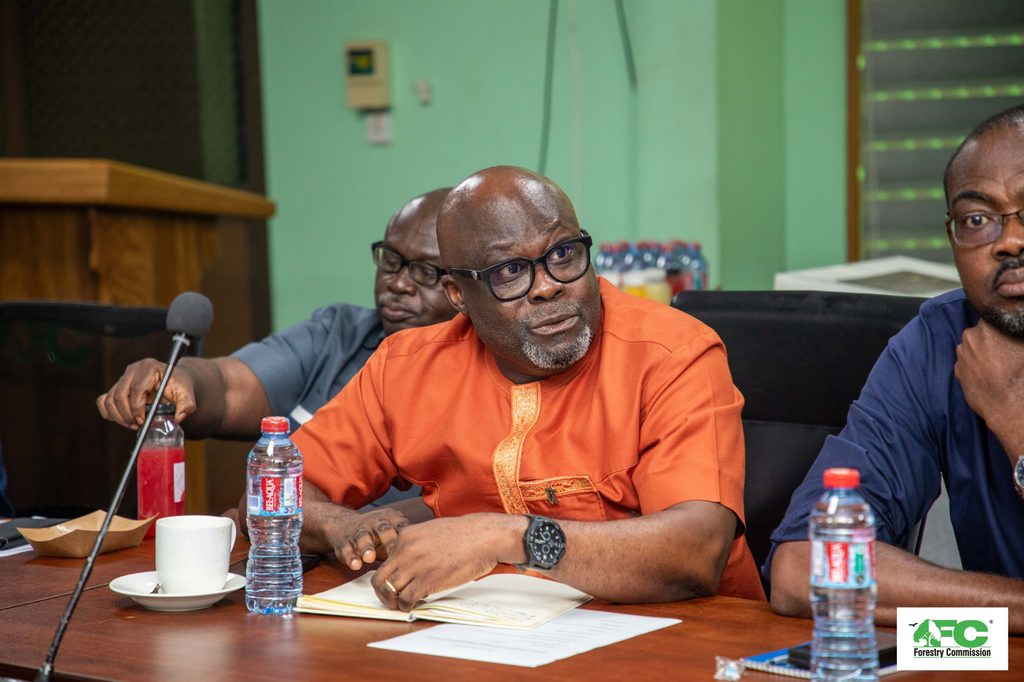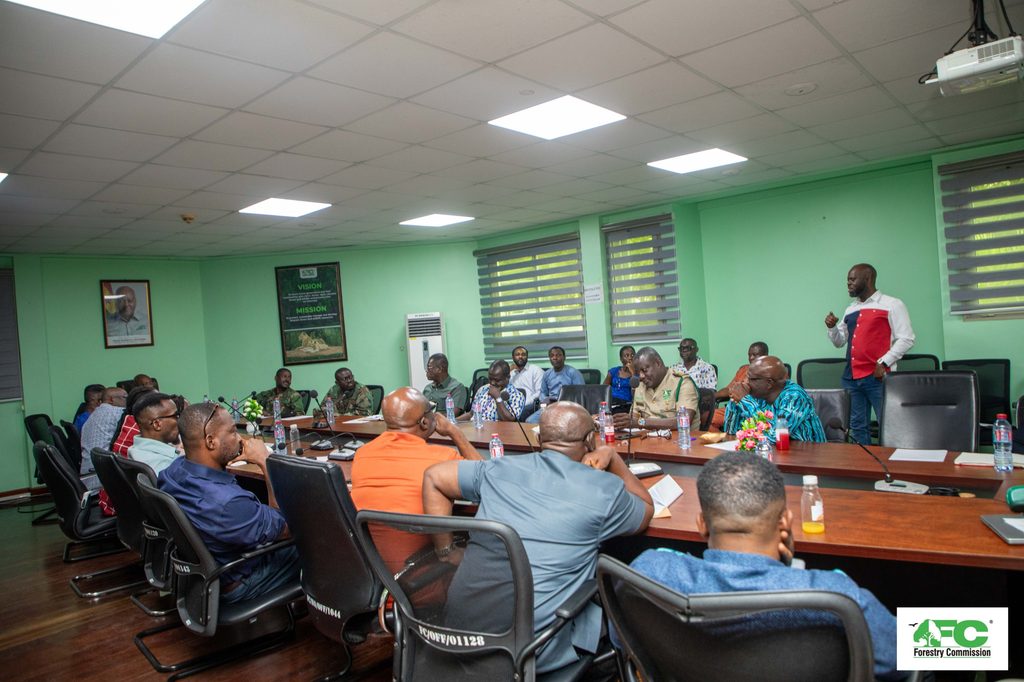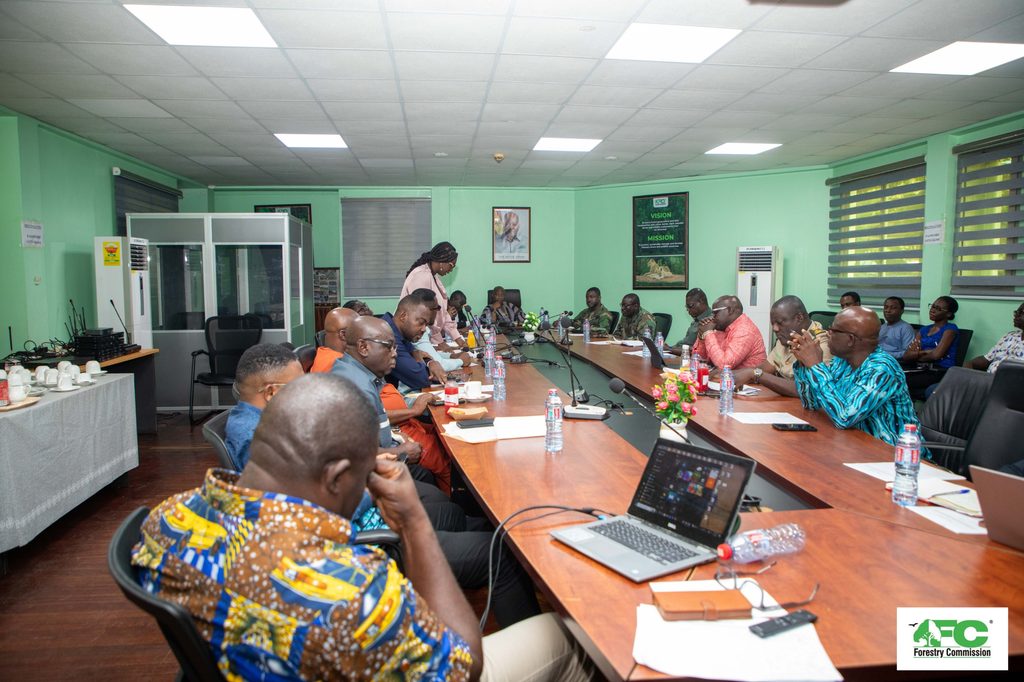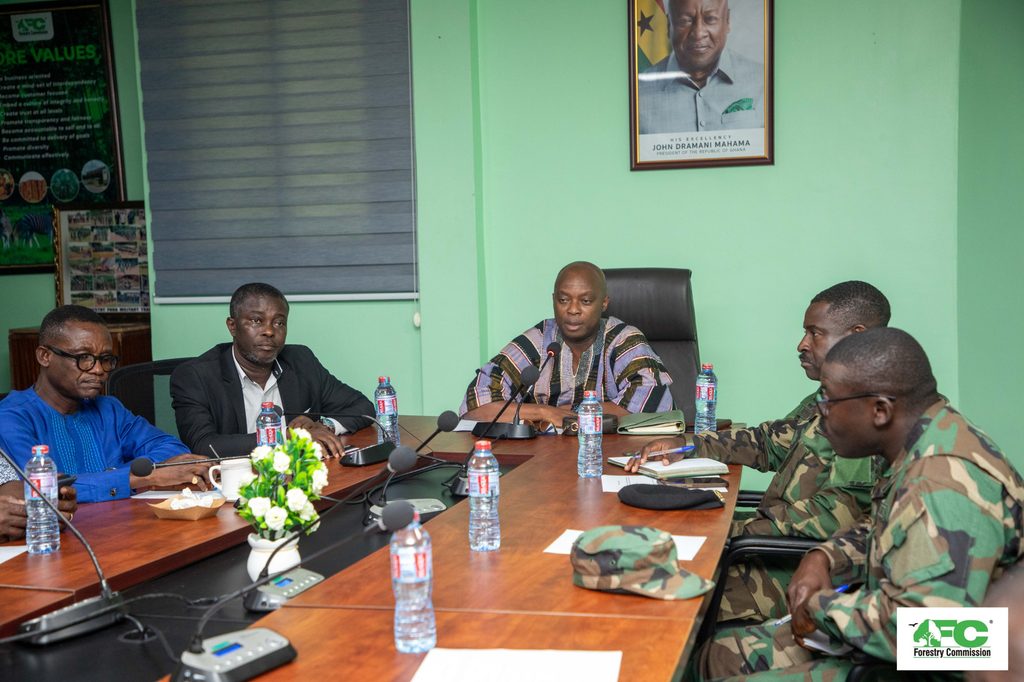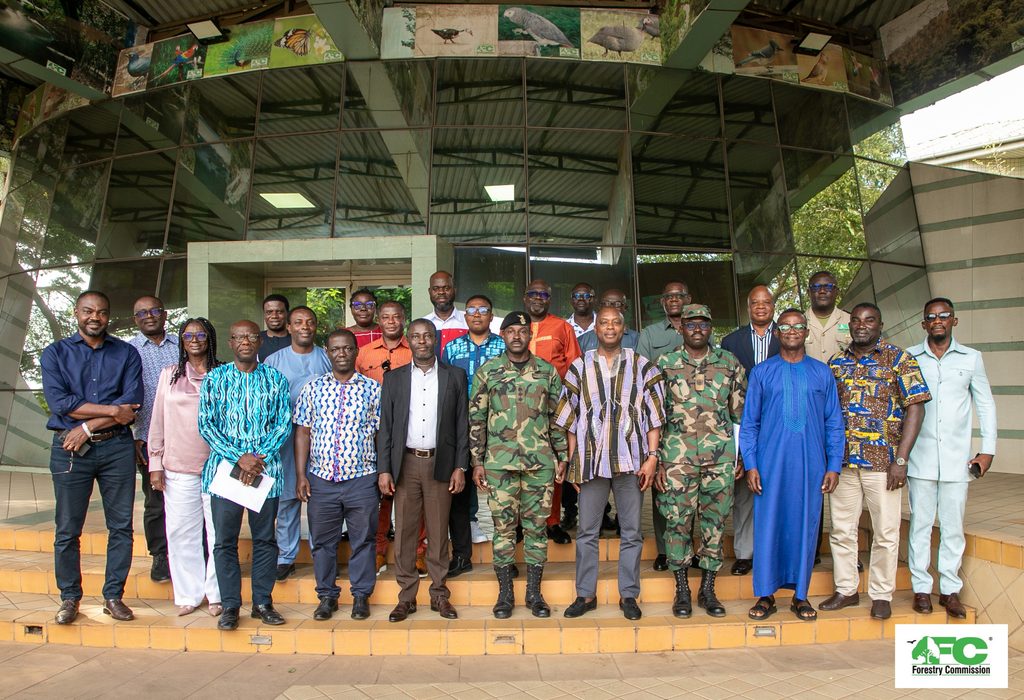
The Forestry Commission (FC) has hosted a two- man delegation from the National Anti-Illegal Mining Operations Secretariat (NAIMOS), led by the Director, Col. Kwame Appiah, for a ligh-level discussions on partnering with FC to curb illegal mining within forest reserves across the country.
The visit was aimed at providing updates on ongoing enforcement activities, developing rules of engagement and reporting procedures, and identifying strategies to strengthen collaboration between the FC and NAIMOS.
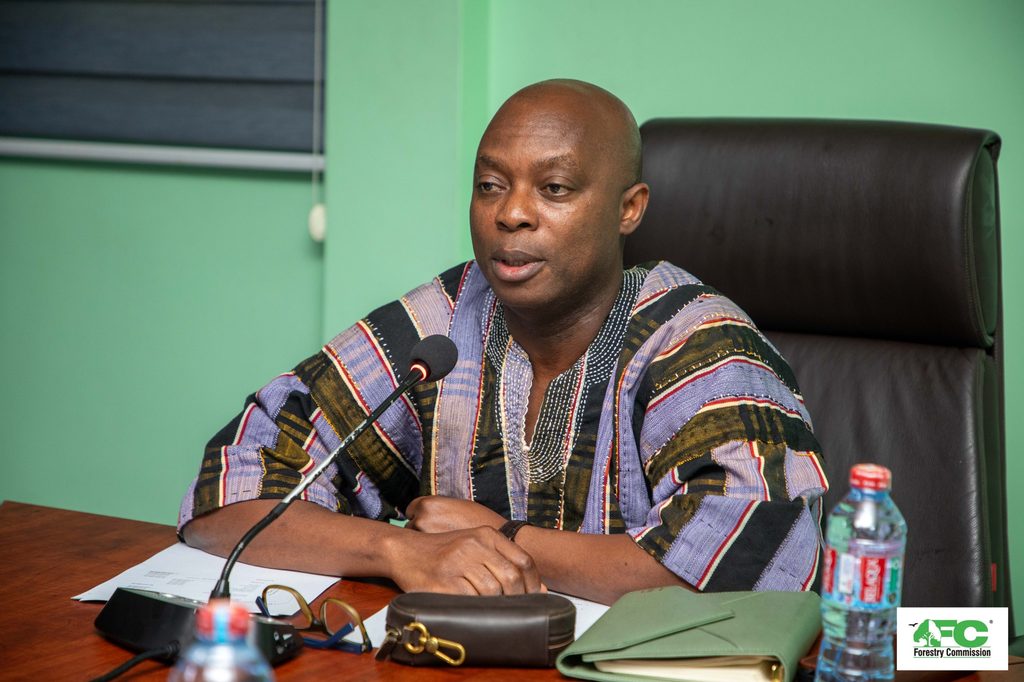
The Chief Executive of Forestry Commission, Dr. Hugh Brown, thanked the Director of NAIMOS for accepting the invitation to meet with the FC Management Team. He said the meeting was important in strengthening collaboration between the two institutions in the fight against illegal mining in forest reserves.
Dr. Brown also spoke about the mandate of the Forestry Commission and explained that the meeting would provide an opportunity for both institutions to openly discuss effective ways of protecting the country’s forest reserves.
The Director of NAIMOS, Col. Kwame Appiah, expressed his appreciation to the Chief Executive for the opportunity to hold the engagement. He explained that NAIMOS works with relevant institutions to fight illegal mining, protect the country’s natural resources, and develop a common framework for tackling the problem.
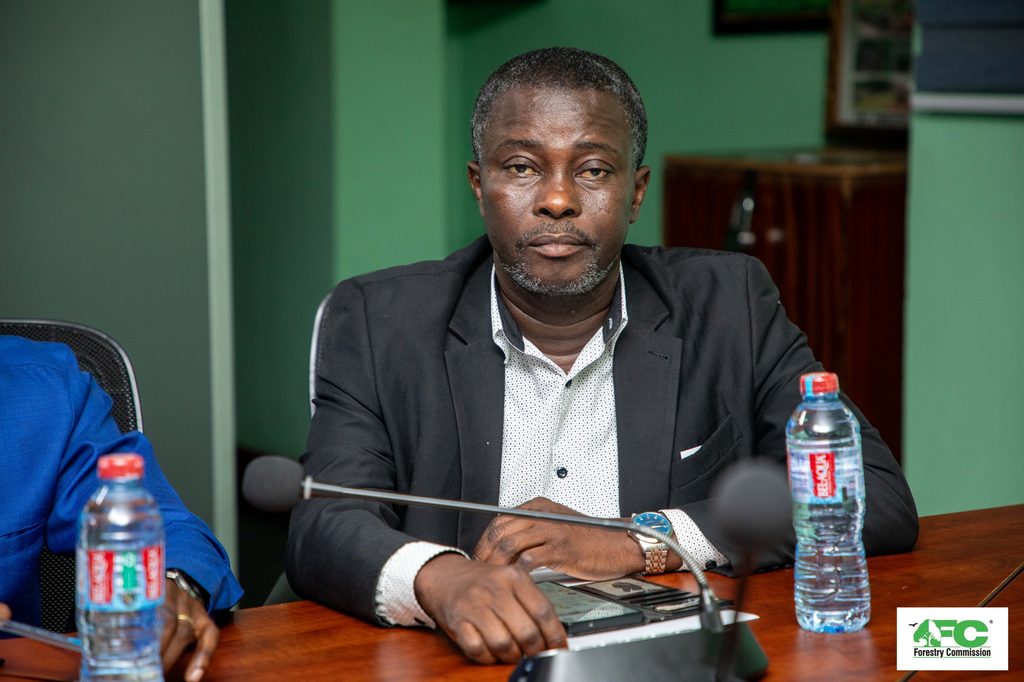
Mr. Michael Pentsil, Operations Manager, Natural Forest , Forest Services Division, on behalf of the Forestry Commission, made a presentation on the Commission’s mandate, vision and mission. He also highlighted the number of forest reserves and wildlife areas in the country, the major causes of deforestation, and illegal mining as a security threat.
The presentation also included a 40-year satellite image changes of the Apraprama Forest Reserve as a case study and some of the major challenges in the protection of the country’s forests.
Col. Appiah also made a presentation on NAIMOS’ operational approach to raiding forest reserves and water bodies to stop illegal mining activities. He explained that before an operation is carried out, NAIMOS engages traditional authorities, political leaders and community members in the affected areas.
According to him, these engagements give illegal miners enough time to leave the forest reserves and stop their activities before the enforcement operation begins.
Col. Appiah further explained that NAIMOS works with other security agencies in affected areas to enforce the law. Some of the measures taken include requiring perpetrators to reclaim degraded areas, handing suspects over to the police for prosecution, destroying heavy earth-moving equipment and other tools found at illegal mining sites, and making offenders sign undertakings not to return to illegal mining activities.
He added that, in some areas, security personnel are stationed to monitor the situation and prevent illegal miners from returning to the sites.
Col. Appiah identified some challenges facing NAIMOS, including issues relating to mining permits and boundaries, inadequate funding, interference from institutions and government officials, difficulties in accessing a drone team to obtain aerial footage, and limited access to environmental specialists to assess and survey affected areas.
Following the presentations, participants held an open session where they asked questions, made suggestions and sought clarification on various issues.
Key areas discussed included identifying Forward Operating Bases (FOBs), working closely with Forestry Commission officials, sharing coordinates of affected areas with NAIMOS, creating a central database of NAIMOS operations, and establishing forest protection camps to provide accommodation for NAIMOS personnel during operations.
The meeting was productive and provided an opportunity for both institutions to strengthen their partnership. The engagement is expected to contribute to more effective efforts to combat illegal mining and protect Ghana’s forest reserves