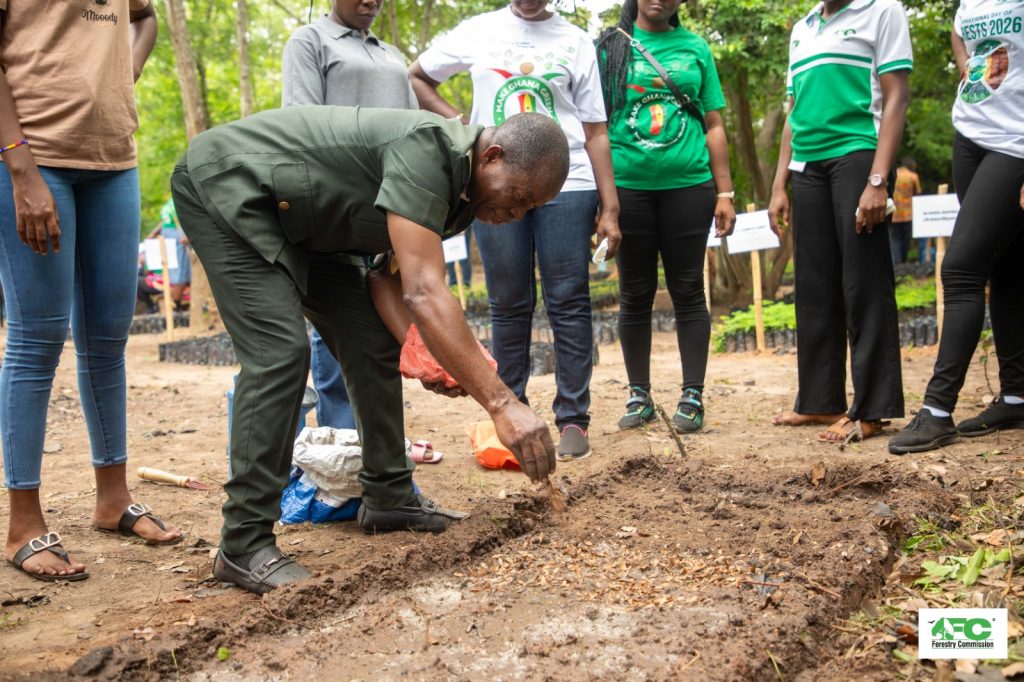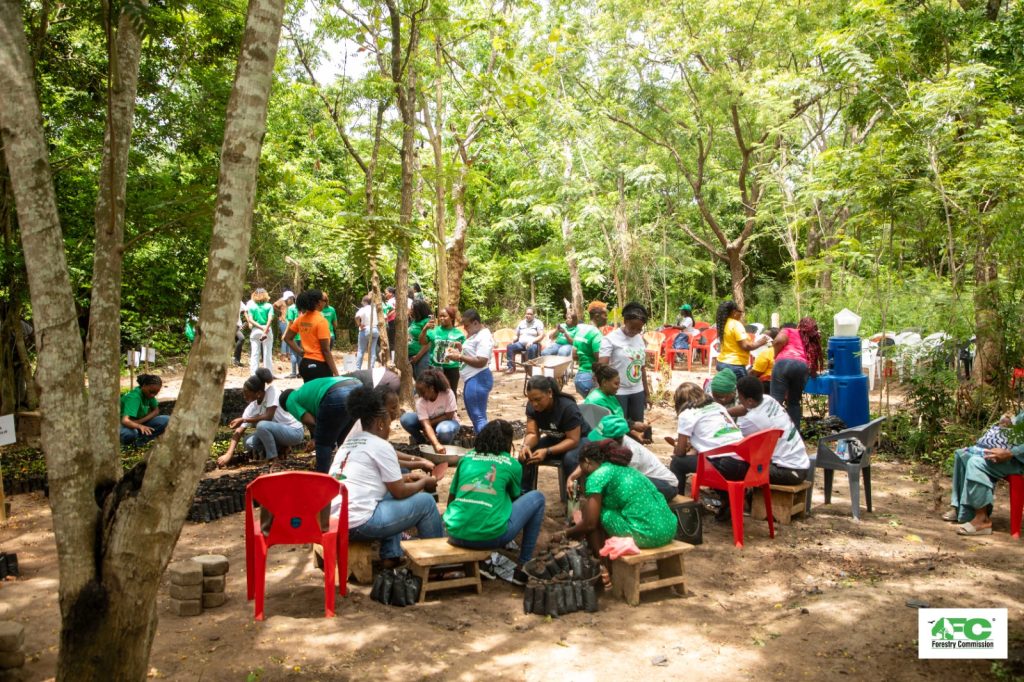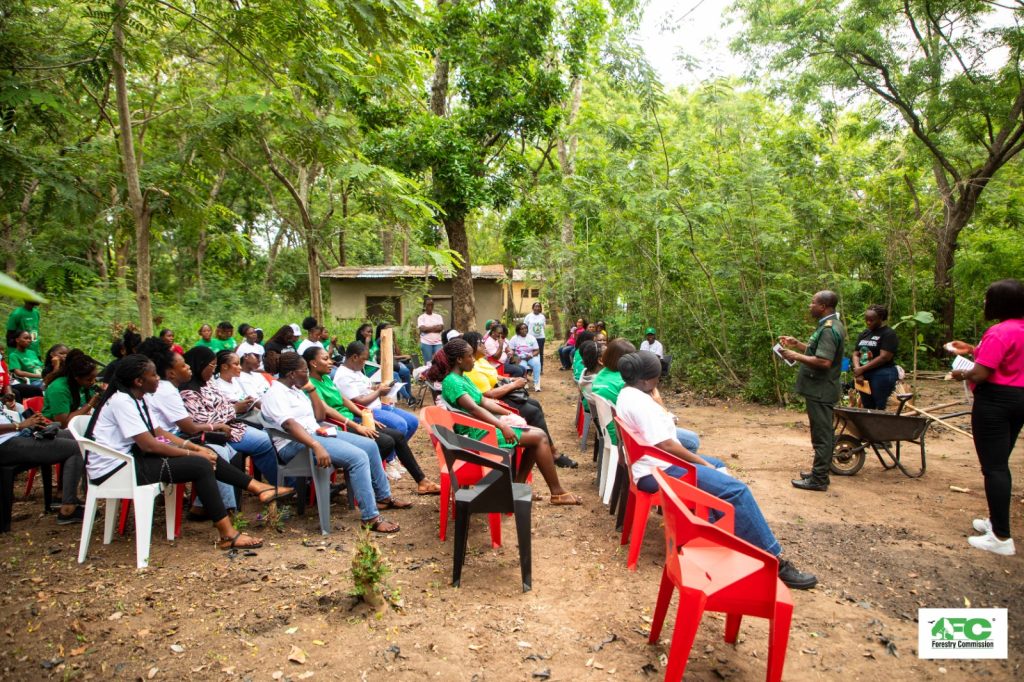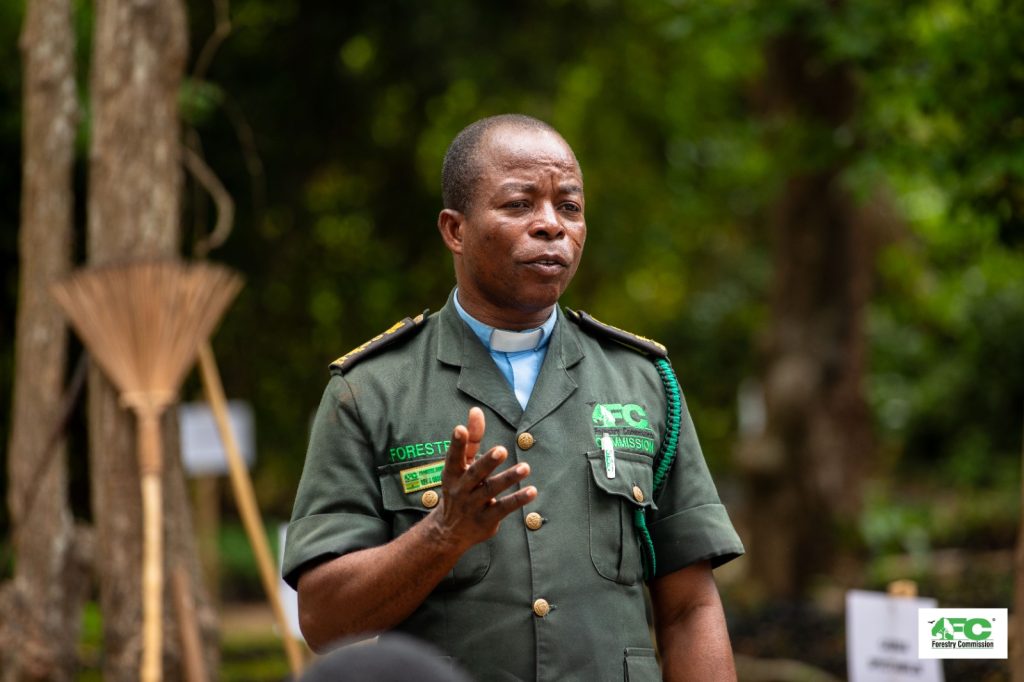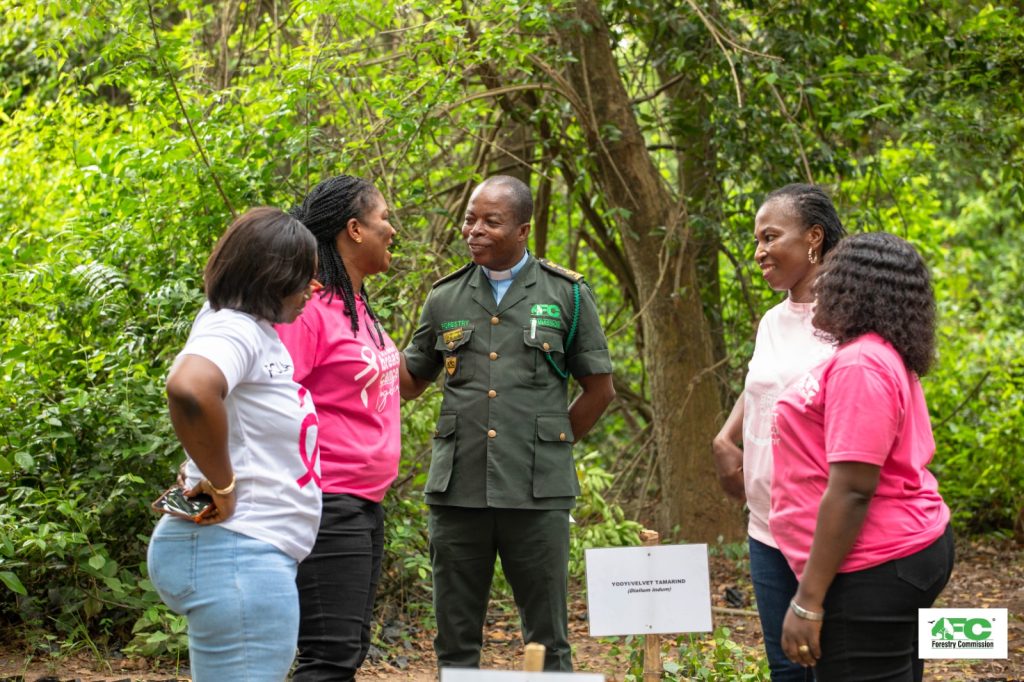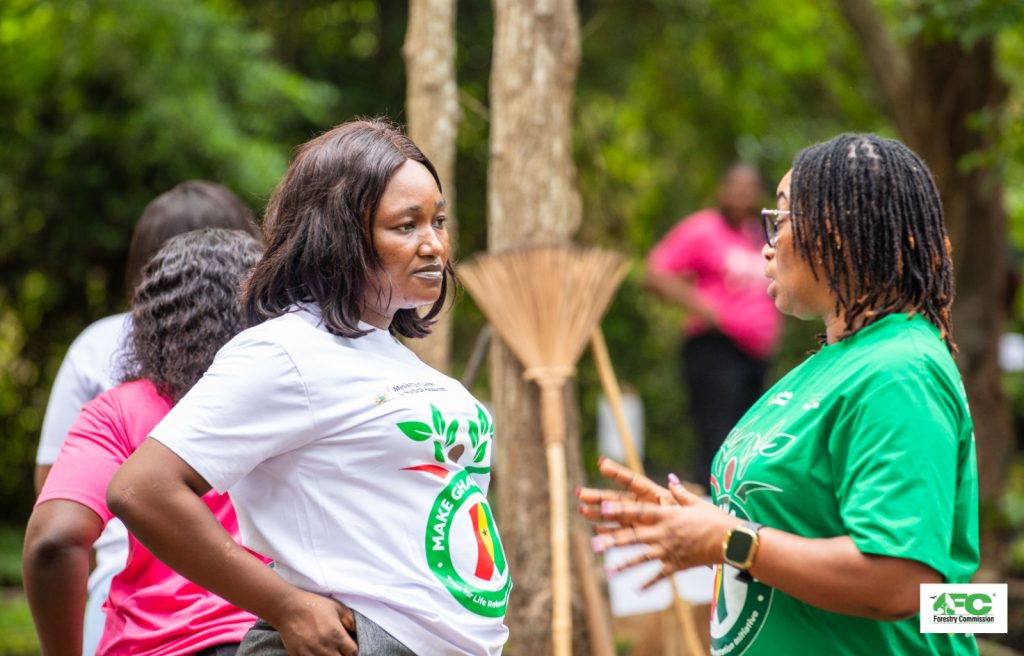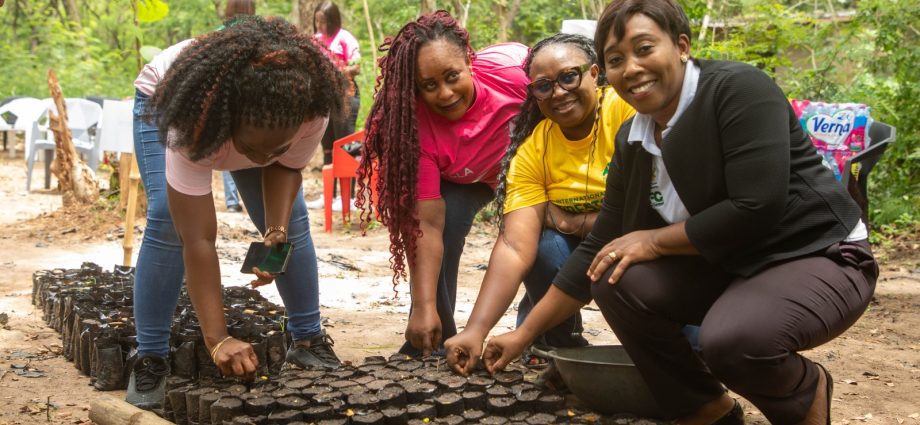
The Greater Accra Chapter of the Forestry Commission Ladies Association (FCLA), in collaboration with the Human Resource Unit, has organised an event dubbed “A Day at the Nursery” to educate members on tree nurturing ahead of the upcoming Tree for Life Reforestation Initiative (T4L).
Delivering the welcome address on behalf of the National President, Mrs. Valerie Fumey-Nassah, the National Vice President, Madam Mary Balkono, warmly greeted participants and encouraged them to fully engage in the day’s activities.
“I am confident we are not here just to fulfil an obligation, but to actively participate and make a meaningful impact,” she stated.
Madam Balkono explained that the programme forms part of the government’s Tree for Life initiative, which is scheduled to commence in June. She emphasised that the initiative seeks to restore Ghana’s forest cover and promote a greener, healthier environment. “This initiative is a call for all of us to come together, support national policies, and contribute to environmental sustainability,” she noted. “Today is not just about planting trees. It is about connecting with nature, appreciating our environment, and understanding the role each of us plays in protecting it.”
She further urged participants to take the opportunity to learn and share knowledge gained, adding that their presence demonstrated unity, leadership, and commitment to environmental conservation.
“Every tree we plant represents hope for a greener environment and a cleaner world for future generations,” she concluded.
In her address, the President of the Greater Accra Chapter of FCLA, Madam Juliana Amoah, expressed appreciation to the Chief Executive, management, national executives, and regional leadership for their support in making the programme a success. She noted that the gathering was to support the Forestry Commission’s Tree for Life Initiative through nursery establishment and preparation for the national tree planting exercise in June.
“This programme is not just about planting trees, it is also about learning and gaining practical experience,” she explained. “Many of us from administrative and support departments do not often get the chance to see the process behind nursery development and today gives us that valuable opportunity.”
She also linked the initiative to the theme of this year’s International Women’s Day, “Give to Gain,” stating that the exercise was a way of giving back in appreciation of management’s continued support. “The seedlings we nurture today represent hope for the future and our collective commitment to environmental sustainability,” she added, while encouraging all members to actively participate in the national planting exercise in June.
As part of the programme, Ms. Emeila Oduro, Vice President of the Greater Accra Chapter of FCLA delivered a presentation on Plantation nursery establishment. She explained that a Plantation nursery is a place where seeds are grown and nurtured into strong, healthy seedlings ready for transplanting.
She outlined key steps involved in establishing a Plantation nursery, including site selection, ensuring reliable access to water, land preparation, bed preparation, sowing of seeds, watering, weed and pest control, as well as regular monitoring and maintenance.
Additionally, Ms. Millicent Bilson educated participants on the tools used in Plantation nursery establishment and explained their various functions. She highlighted essential tools such as the hand trowel, poly pots, hand rake, hand fork, rake, shovel, pickaxe, broom, cutlass, wheelbarrow, and head pan.
According to her, these tools are used for activities such as soil preparation, filling poly pots, planting seeds, weeding, watering, transporting soil and seedlings, and maintaining cleanliness within the nursery area.
She stressed that each tool plays a vital role in ensuring efficient nursery operations and creating the best conditions for seedling growth.
The event provided participants with both practical knowledge and hands-on experience, reinforcing the Forestry Commission’s commitment to environmental sustainability and the success of the Tree for Life initiative