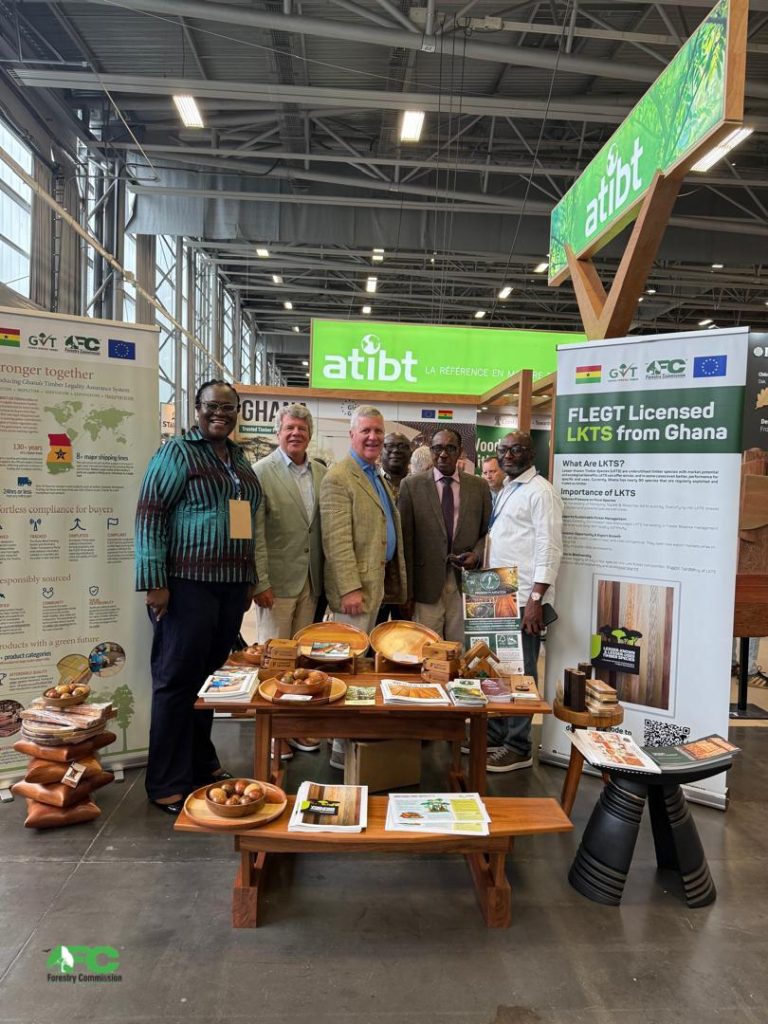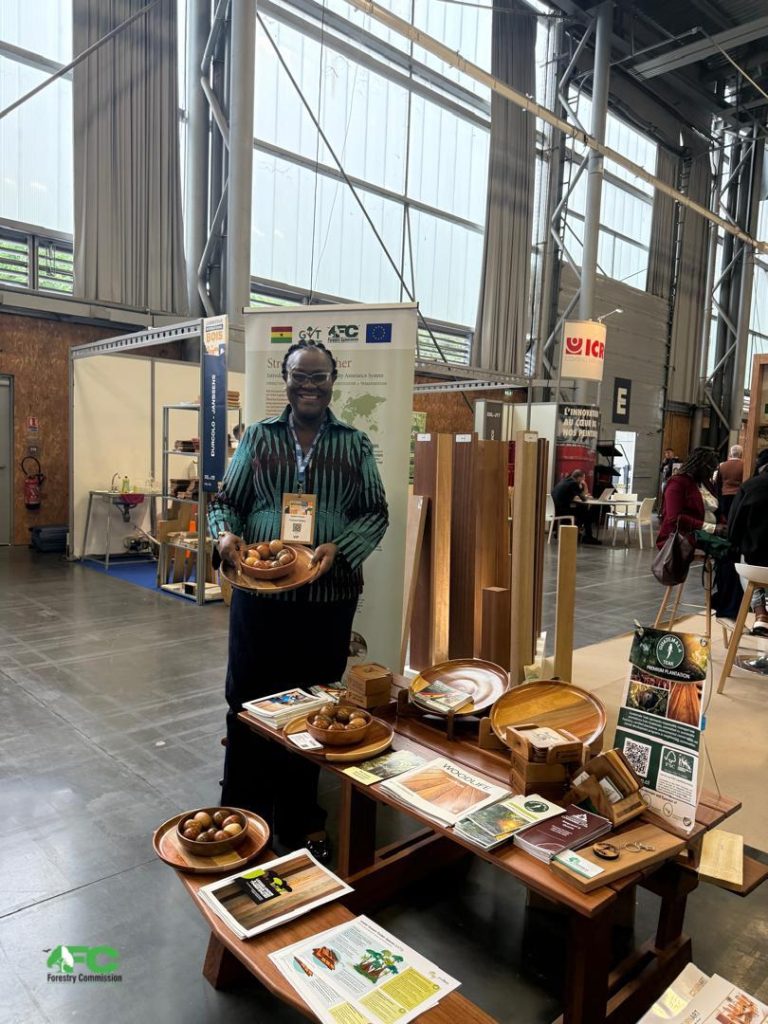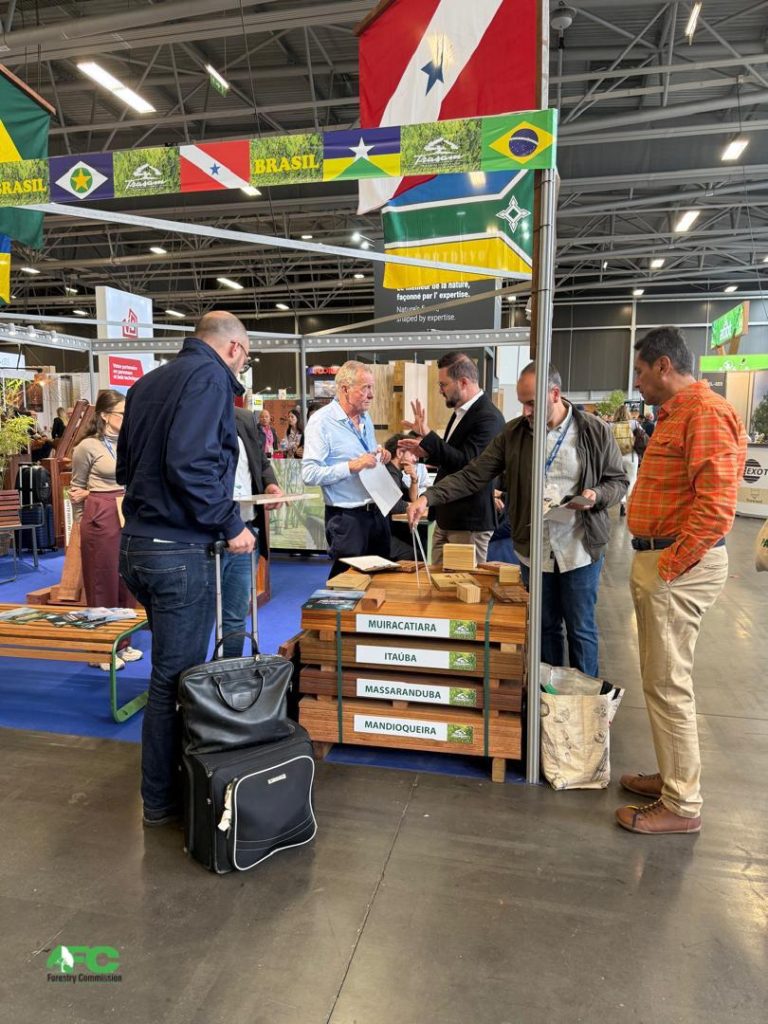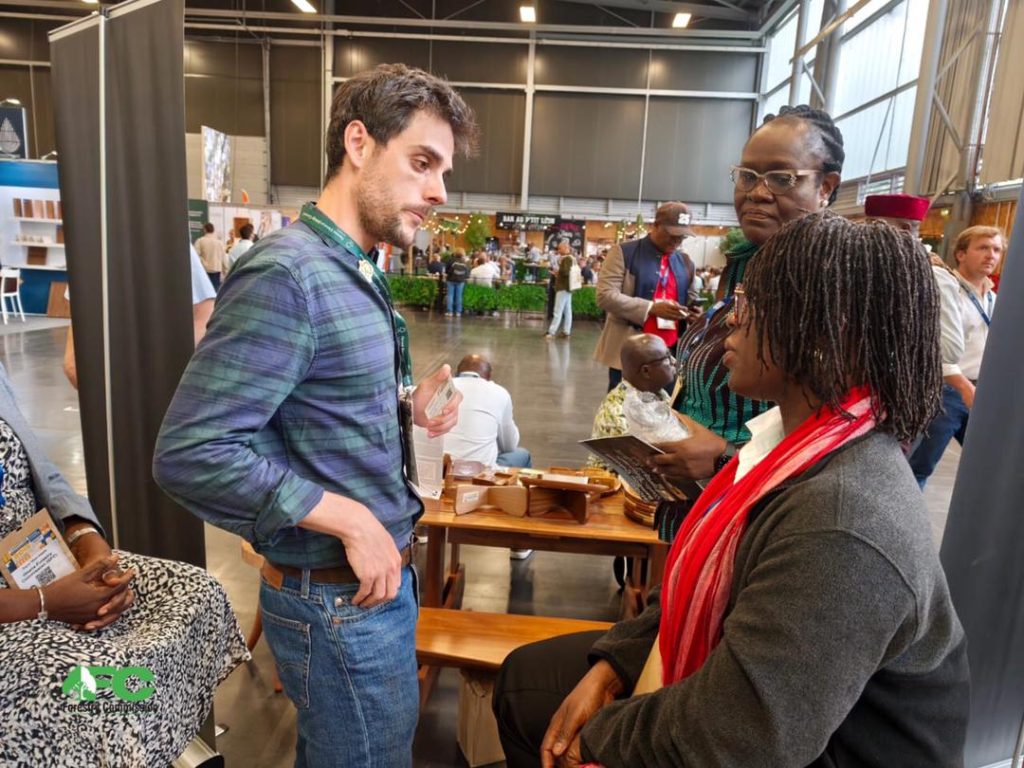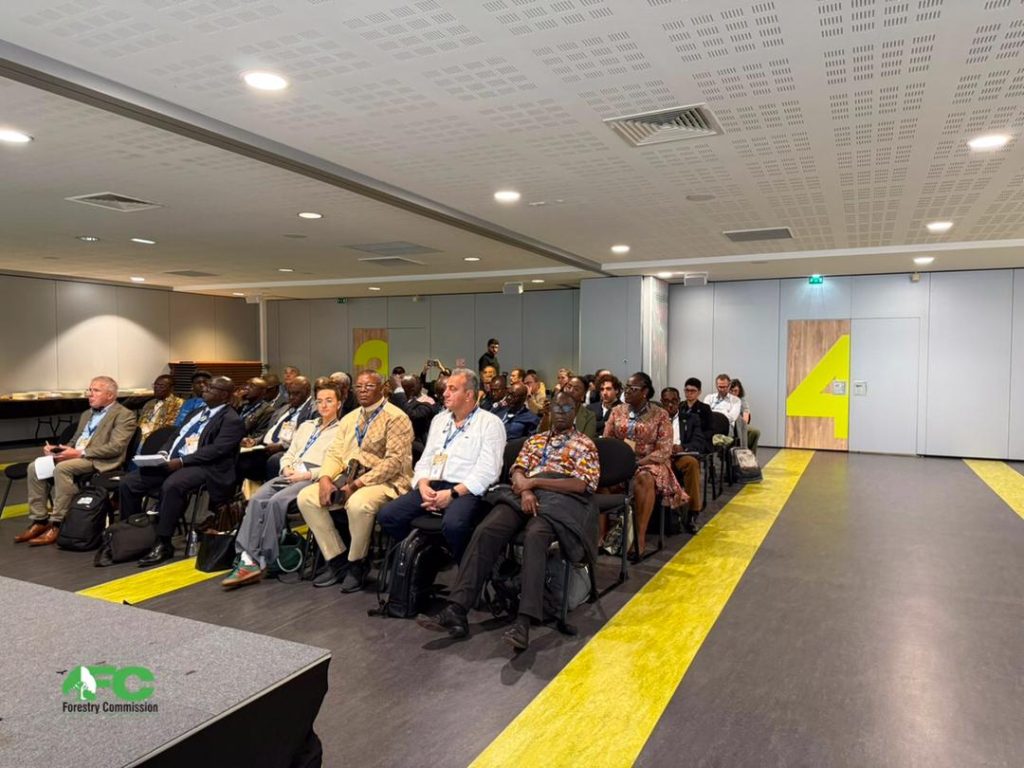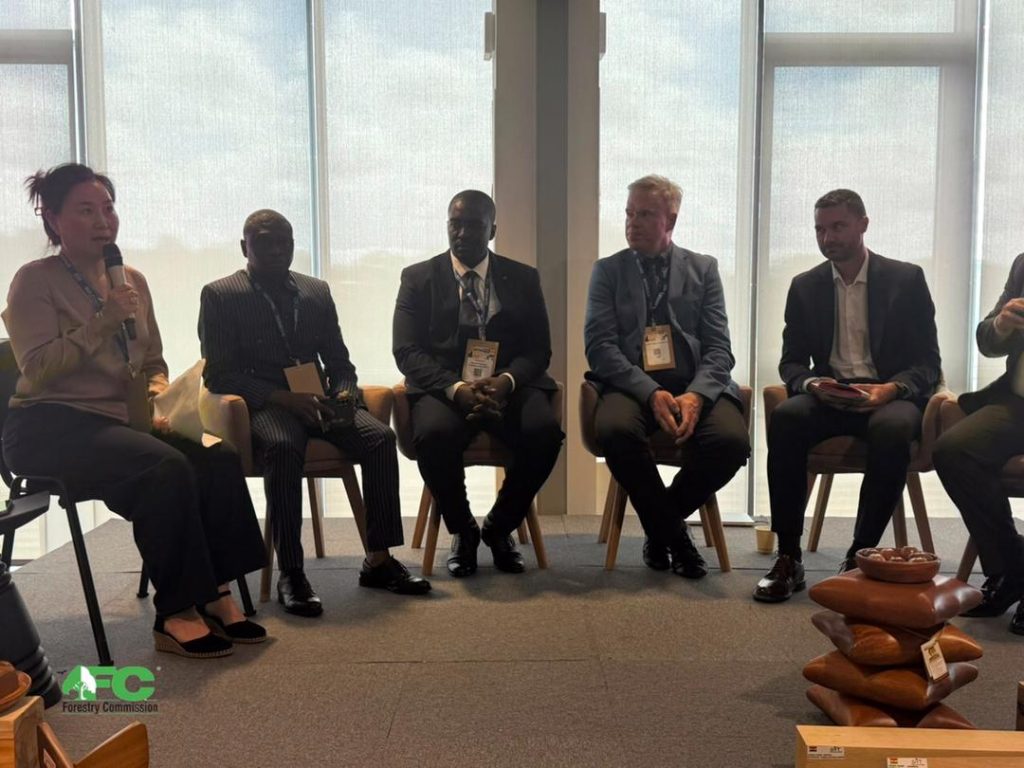
Dr. Richard Gyimah, Executive Director of the Timber Industry Development Division of the Forestry Commission, has informed participants at the just ended Carreffour International du Bois (CIB), which was held in Nantes, France, that Ghana’s forests are not just resources. They are the foundation of livelihoods, and Ghana is proving it can manage them responsibly and sustainably.
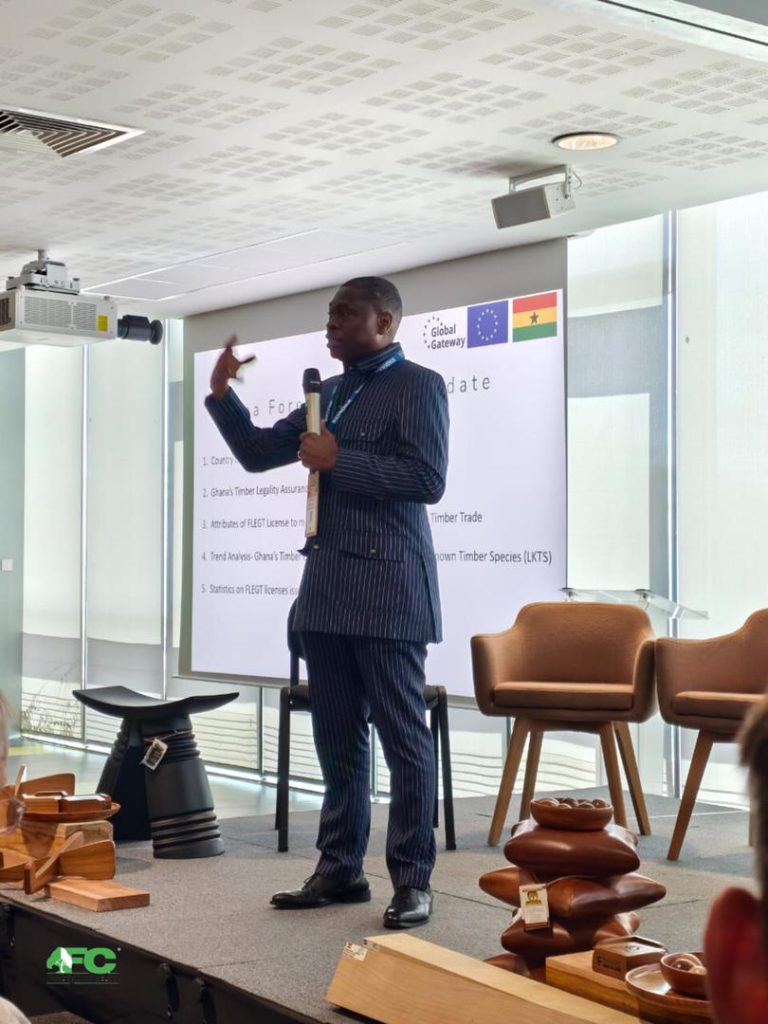
Speaking at the EU-Ghana Timber Trade and Investment Forum which was organised as part of the activities for the CIB, Dr. Gyimah delivered the “Ghana Forest Industry Update” against the backdrop of shifting global demands where buyers no longer just ask for price and quality but ask for proof of legality and sustainable forest management practices
Dr. Gyimah mentioned that Ghana’s forest landscape is vast and varied. The country has 1.2 million hectares of closed forest and 5.4 million hectares of open forest. Within the High Forest Zone, 1.63 million hectares are gazetted as Forest Reserves, with 715,000 hectares set aside specifically for timber production. Another 1.3 million hectares are managed as Wildlife Protected Areas.
He said these forests have shaped Ghana’s economy for generations. From 1995 to 2020, forest resources were a key driver of economic transformation. The timber industry alone contributed 4-6% to GDP between 2000 and 2010. While its share has reduced to about 1.5% today, its role in employment remains critical.
“In 2021, the sector employed approximately 100,000 people formally,” Dr. Gyimah told delegates. “But when you include informal activities like small-scale carpentry, woodcarving, and charcoal production, etc., an estimated 3 million Ghanaians depend on the forest value chain.”
He also highlighted an often-overlooked fact that 75% of Ghana’s energy needs are still met through fuelwood and charcoal, with total wood fuel consumption in 2022 reaching 2,940 ktoe.
Touching on Ghana’s timber exports story of change, Dr. Gyimah said in 2000, timber and forest products made up about 11% of total export earnings. By 2022 and 2023, that figure had dropped to about 1% yet the value remains important in Ghana’s commodity trade. . Timber export earnings in 2024 stood at €123.4 million.
Dr. Gyimah explained that Ghana is now focusing on value addition and encouraging the use of lesser-used timber species to strengthen competitiveness. As of the first quarter of 2026, 525 businesses were registered with the Forestry Commission. This includes 51 large-scale wood processors, 325 small-scale processors, 29 export trading firms, and nine large furniture manufacturers.
To sustain supply, Ghana has developed about 400,000 hectares of plantations, with 340,000 hectares in the public sector and 60,000 hectares private. Annual allowable cut from production reserves is capped at 1 million cubic meters of natural timber, plus about 300,000 m³ from plantations.
The turning point in Dr. Gyimah’s presentation was TLAS, Ghana’s Timber Legality Assurance System. Developed under the Voluntary Partnership Agreement (VPA) with the EU, TLAS was built over years, through inclusive stakeholder engagement and backed by legislative instruments. Ghana became the first country in the West African sub-region, after Indonesia globally to issue FLEGT licenses since October 2025. So far, about 626 licenses have been issued to cover timber exported to 19 European countries. Every shipment of Ghanaian timber destined for the EU now carries a FLEGT license. The FLEGT Licences carry attributes that meet international requirements for global timber trade. For instance, the license contain Forestry Commission watermarks, system-generated numbers, seals, and stamps all for security purposes. Furthermore, it records HS codes, product descriptions, volumes, and importer details. For CITES-listed species, validation happens alongside the license. In the near future ,Geolocation data will be included to meet EUDR requirements, and discussions are ongoing to add QR codes for quick verification.
Supporting this is the Chain of Custody system, powered by an Electronic Wood Tracking System (WTS). The system traces timber from the forest, through mills, to the point of export and domestic markets. It reconciles wood flows with documentation at every step, creating a country-wide database on producer compliance.
“The beauty of TLAS is that it goes beyond issuing a license,” Dr. Gyimah said. “It strengthens institutional coordination, improves forest management, and ensures benefits flow to local communities through social infrastructure and jobs.”, Dr Gyimah said.
Talking about key lessons from FLEGT implementation Dr. Richard Gyimah said there was the need for clear guidelines and manuals for all actors, an industry portal to guide companies on compliance, and a transparency portal for public and civil society monitoring. Regular training and engagement with stakeholders have also proven essential.
He emphasised that Ghana’s FLEGT process is transformational. It has built confidence and global acceptance because it is rooted in an internationally recognised initiative- the Ghana – EU Voluntary Partnership Agreement (VPA). The system also complements forest certification and new regulations like the EU Deforestation Regulation.
Bringing his presentation to an end, Dr. Gyimah reiterated that Ghana is not just selling timber; it is selling trust. With seven principles embedded in its legal timber standard, from source of timber verification to harvesting operations, and through transportation to processing and fiscal obligation commitments , Ghana has built a loop for continuous learning involving government, private sector, and civil society.
“The Ghana FLEGT process needs to be valued and recognized because it delivers more than legality,” it delivers sustainability and a future where forests and people thrive together”, he concluded.