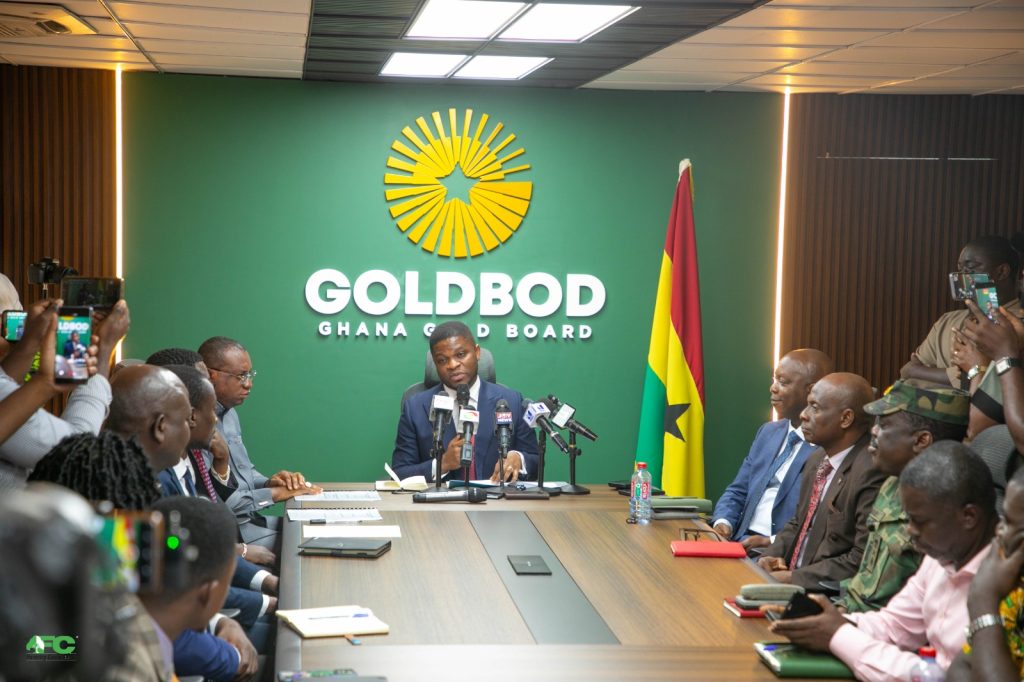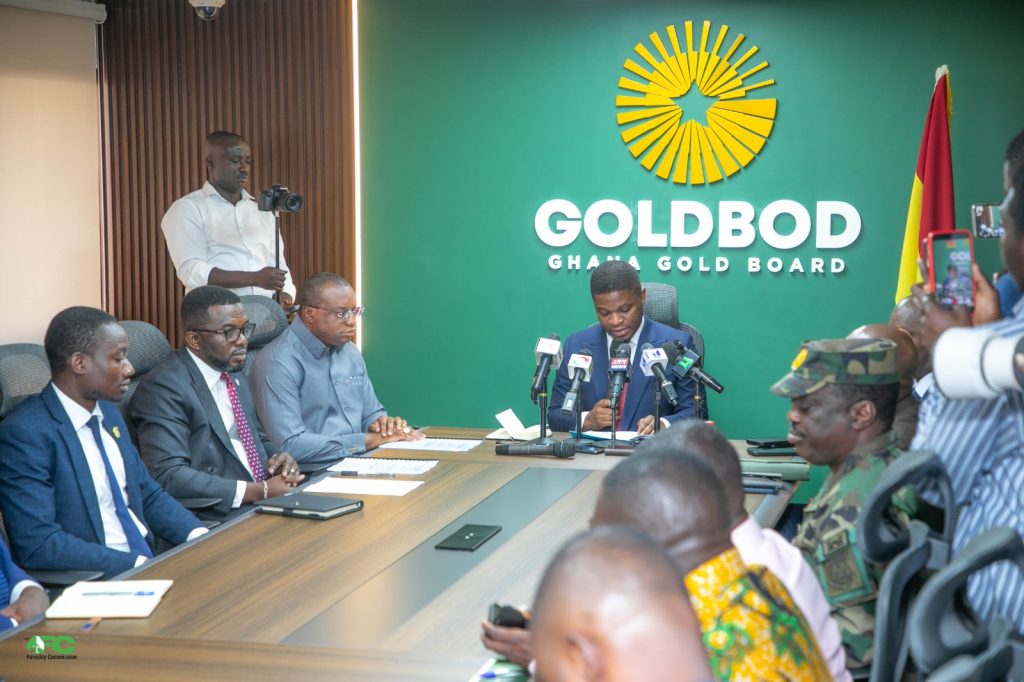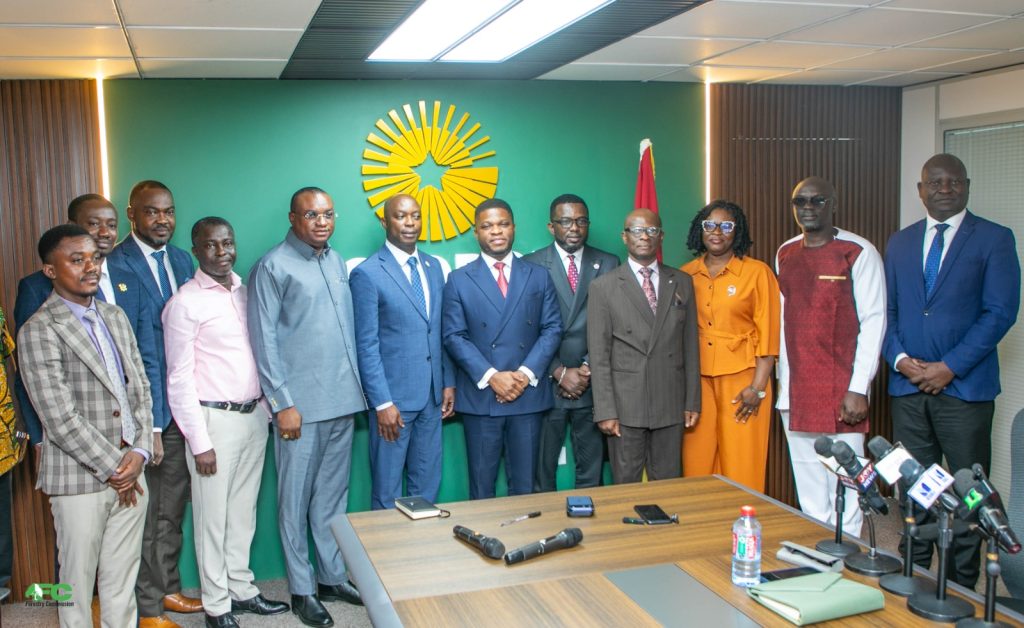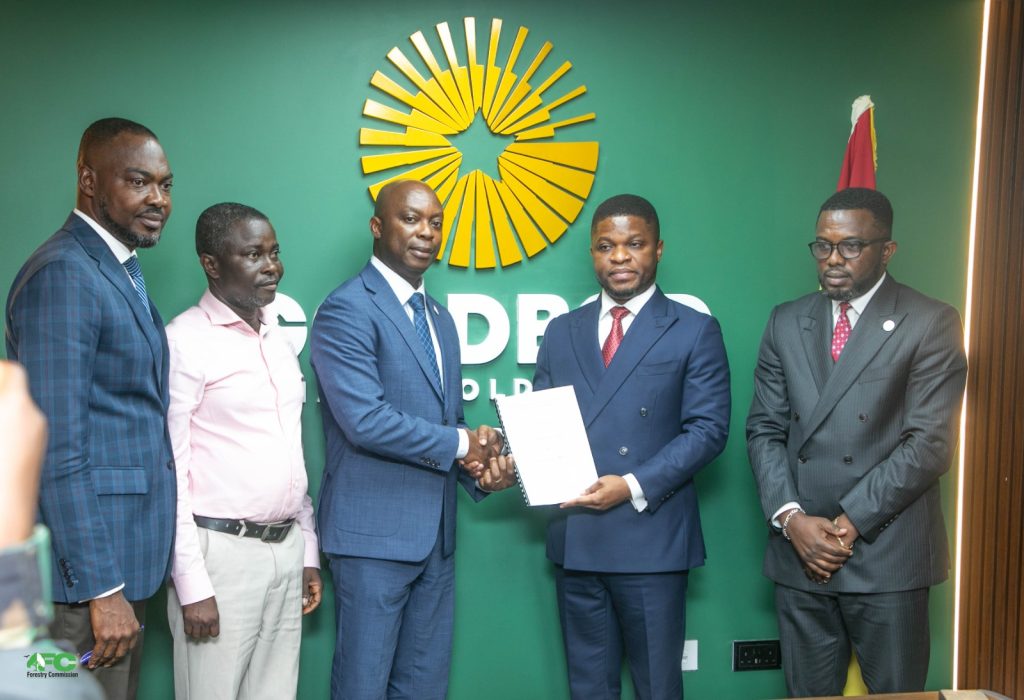
The Forestry Commission (FC) has taken a major step in its efforts to restore degraded forest landscapes and combat the environmental impacts of illegal mining through a landmark partnership with the Ghana Gold Board (GoldBod) and the Ghana Armed Forces.
The collaboration will see the implementation of a large-scale land reclamation and reforestation programme in the Tano Nimiri Forest Reserve, reinforcing the Commission’s commitment to sustainable forest management, biodiversity conservation and ecological restoration.
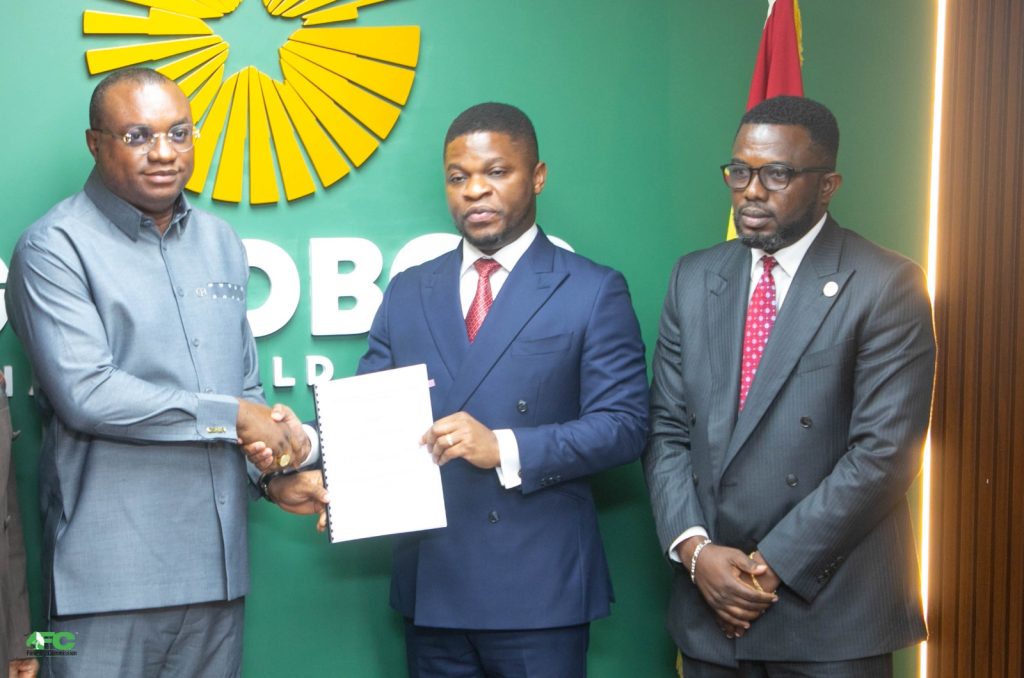
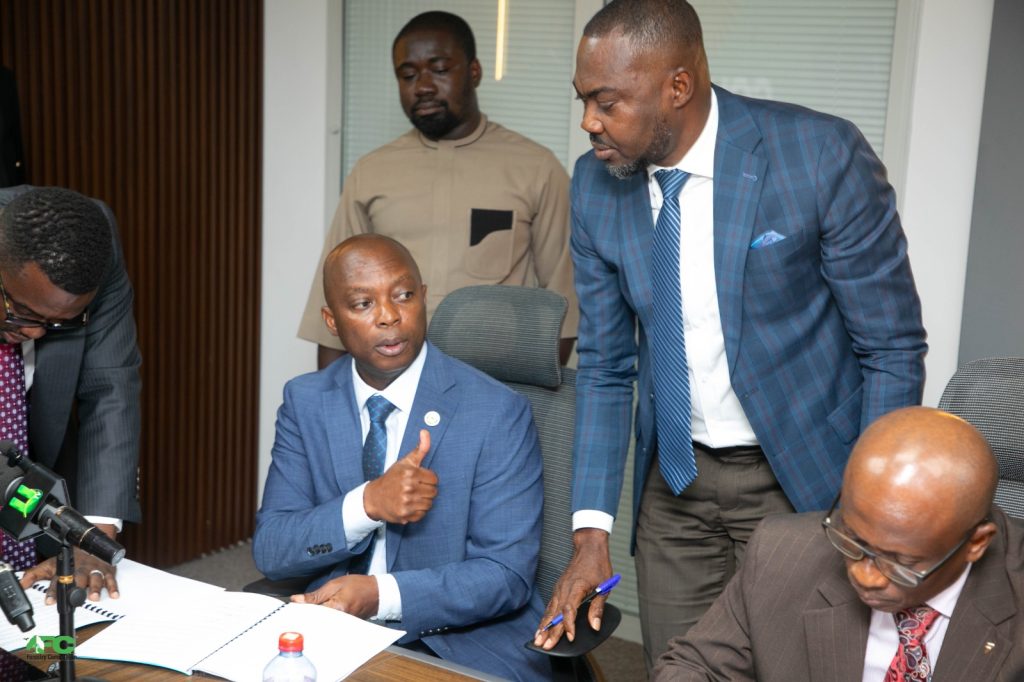
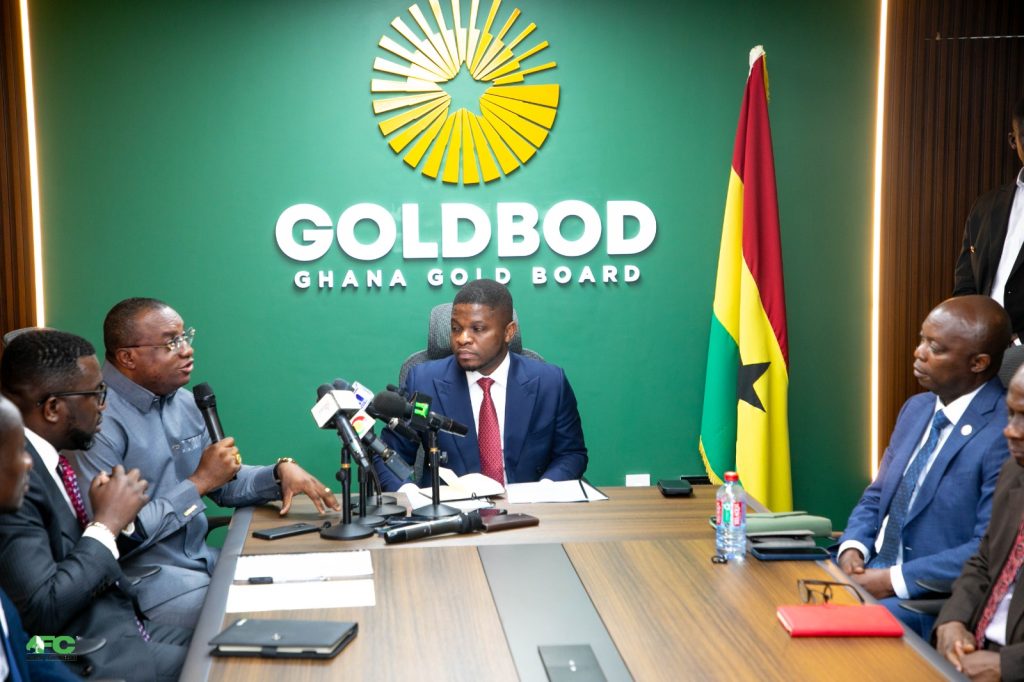
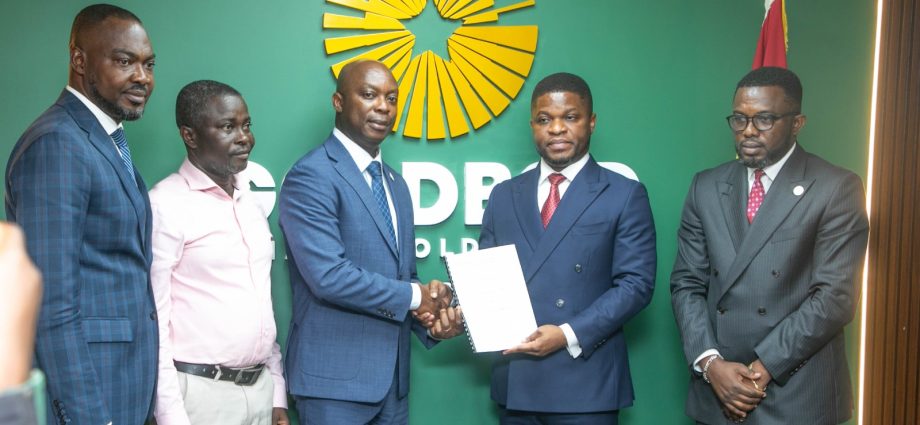
The partnership was formalised through the signing of an agreement under which GoldBod will provide full funding for the first phase of the project, while the Ghana Armed Forces and the Forestry Commission provide technical and operational expertise to reclaim and restore degraded sections of the reserve. The initiative forms part of a broader national effort to rehabilitate forest landscapes damaged by illegal mining and restore critical ecosystem services.
The first phase of the project will focus on the reclamation and restoration of 50 hectares within Compartment 161 of the Tano Nimiri Forest Reserve, one of the country’s forest ecosystems that has suffered extensive degradation as a result of illegal mining activities. The project, estimated to cost approximately GH¢35 million, will involve land reclamation, site stabilisation, afforestation and ecosystem restoration activities aimed at returning the degraded landscape to productive ecological use.
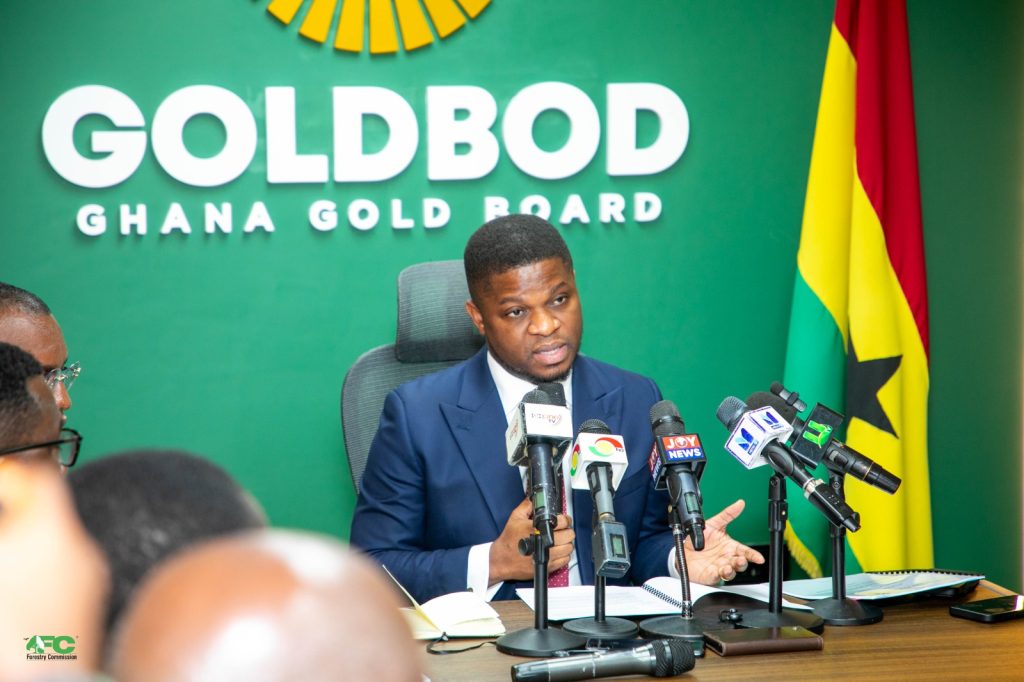
Delivering the welcome address, the Chief Executive Officer (CEO) of GoldBod, Mr. Sammy Gyamfi, Esq., described the initiative as a major government intervention aimed at restoring degraded forest lands and promoting responsible natural resource governance. He noted that assessments of affected sites revealed extensive destruction of forest vegetation and ecosystems caused by illegal mining activities, underscoring the urgent need for reclamation and ecological restoration measures. Mr. Gyamfi emphasised that GoldBod’s support for the project reflects its commitment to environmental sustainability, stressing that while gold remains a vital national asset, its exploitation must not come at the expense of Ghana’s environmental integrity.
He further disclosed that the reclamation phase of the project is estimated to cost GH¢27.9 million, with an additional GH¢7.4 million allocated for reforestation and restoration activities to be undertaken by the Forestry Commission. According to him, the Engineer Regiment of the Ghana Armed Forces will execute the reclamation works, leveraging its expertise in land restoration, grading, backfilling, land shaping and site stabilisation. The Forestry Commission will subsequently lead the afforestation and ecological restoration efforts, drawing on its extensive experience in forest rehabilitation and sustainable forest management.
The Deputy Minister for Defence, Hon. Ernest Brogya Genfi, in his addresss, reaffirmed the commitment of the Ghana Armed Forces to support the Forestry Commission’s restoration agenda. He emphasised that while efforts to prevent illegal mining remain important, restoring lands already degraded by such activities is equally critical.
Hon. Genfi further stated that the lands that have already been destroyed still require deliberate efforts to restore them. He expressed confidence that the initiative would serve as a model for similar reclamation programmes across the country.
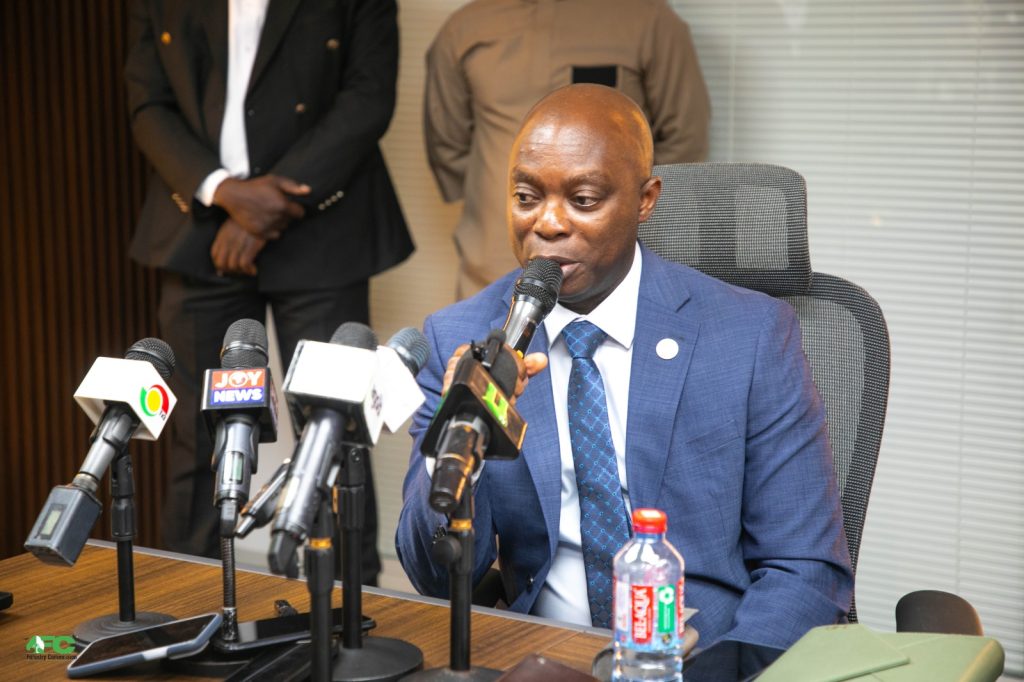
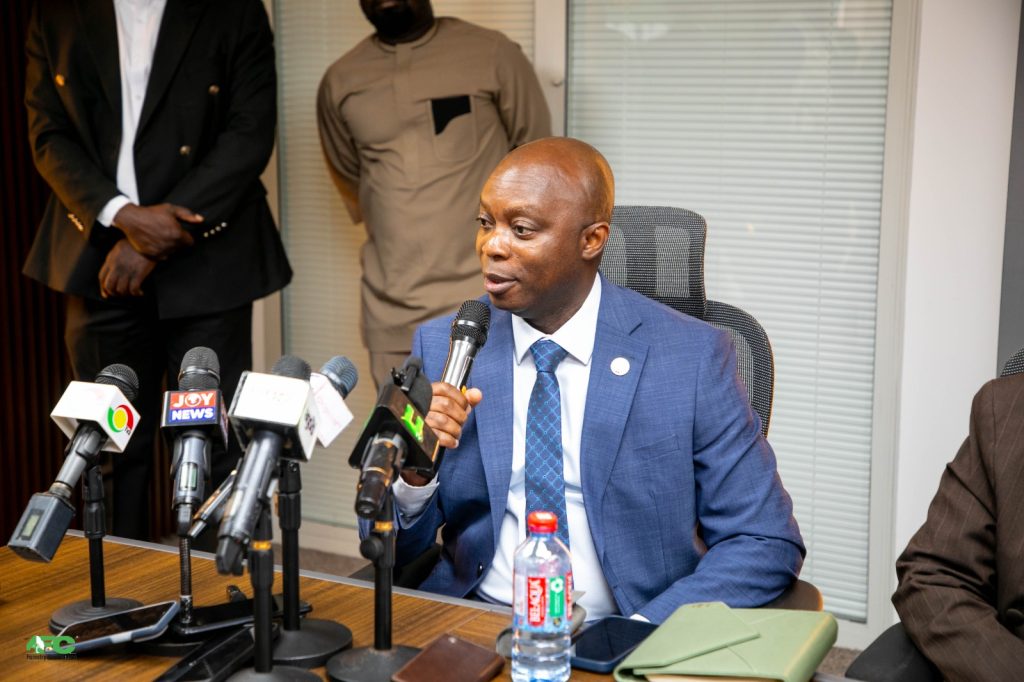
In his statement, the Chief Executive of FC, Dr. Hugh C. A. Brown, commended the GoldBod for its swift response to the Commission’s appeal for support in restoring degraded forest reserves. He noted that the partnership, formalised within a short period of engagement between the two institutions, reflects a shared commitment to environmental restoration and sustainable development.
Dr. Brown disclosed that nearly 8,700 hectares of forest reserves across Ghana had been degraded by illegal mining activities as of the end of 2024, describing the situation as a major environmental concern requiring collective action. He indicated that the restoration of the initial 50 hectares within the Tano Nimiri Forest Reserve marks a significant step in the Forestry Commission’s landscape restoration agenda. This, he stated, will contribute to biodiversity conservation, watershed protection and the long-term sustainability of the country’s forest resources. He further appealed to corporate institutions, development partners and other stakeholders to support similar initiatives to complement ongoing efforts to combat illegal mining and rehabilitate degraded ecosystems.
This partnership underscores the FC’s leadership role in safeguarding Ghana’s forests and advancing national restoration objectives. By bringing together the financial support of GoldBod, the engineering expertise of the Ghana Armed Forces and the technical knowledge of FC, the initiative demonstrates a collaborative approach to addressing one of the Country’s most pressing environmental challenges