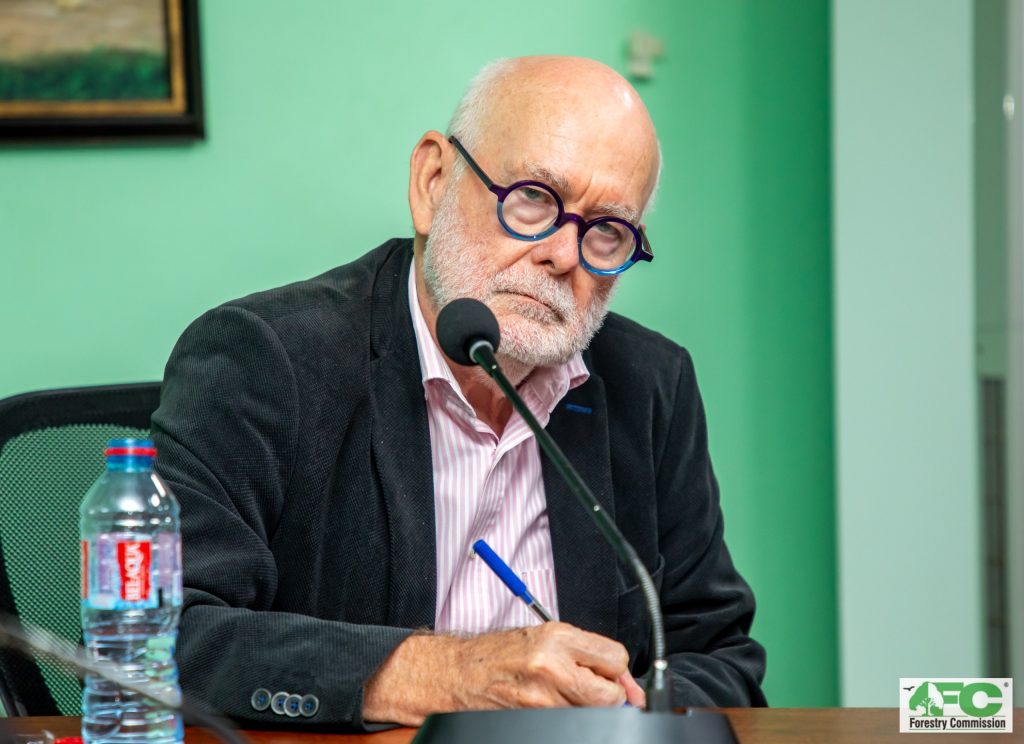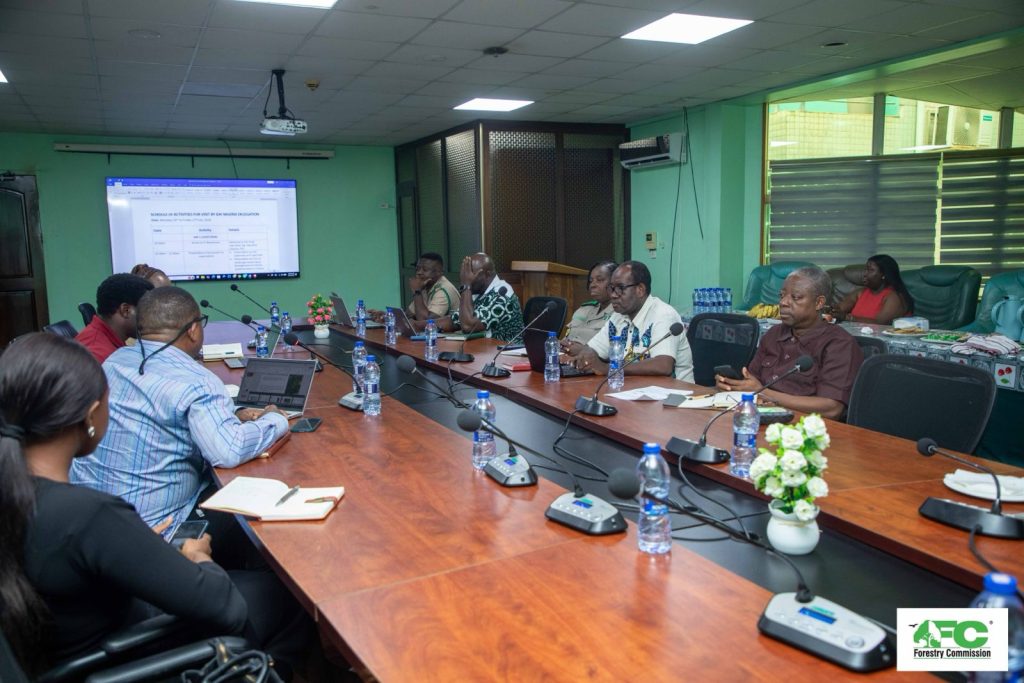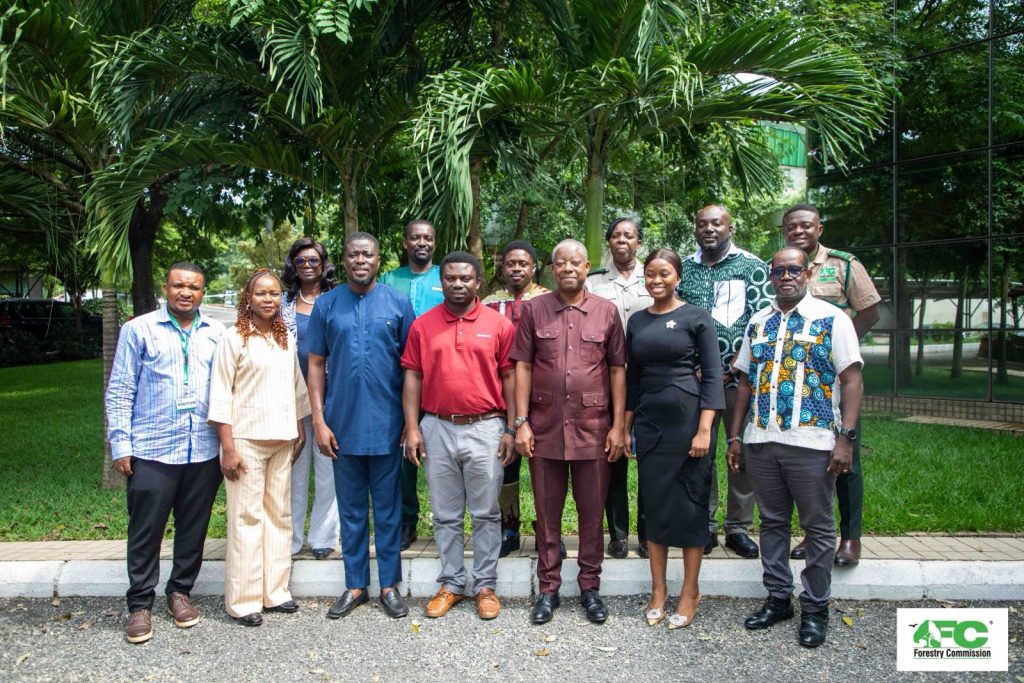
The Forestry Commission (FC) has hosted a five-member delegation from IDH- the Sustainable Trade Initiative (IDH) and the Edo State Forestry Commission (ESFC), Nigeria, on a week-long learning visit aimed at exchanging best practices in landscape restoration, sustainable land management and community-based natural resource governance, while exploring opportunities for future collaboration between the two countries.
The delegation, led by Mr. Abraham Ogwu, Senior Programme Manager at IDH Nigeria, comprised Mr. Tella Adesoji, Senior Programme Officer, IDH Nigeria; Mrs. Esther Uwoghiren, Director of Forest Management and Utilisation, ESFC; Mr. Maxwell Akpele, Director of Forest Plantation and Extension Services, ESFC; and Ms. Sandra Abugri, Trade and Market Development Officer, IDH Ghana.
Welcoming the delegation on behalf of the Chief Executive (CE)of the FC, Dr. Hugh Brown, the Acting (Ag.) Deputy CE, Mr. Elikem Kotoko, reaffirmed the Commission’s commitment to strengthening regional cooperation and knowledge sharing to advance sustainable forest management and climate resilience. In response, Mr. Abraham Ogwu, on behalf of the visiting delegation, mentioned that the team is appreciative for the opportunity to learn from Ghana’s successes in forest conservation, particularly its collaborative approach with private stakeholders and forest fringe communities. He also expressed confidence that the visit would deepen cooperation among the three institutions.
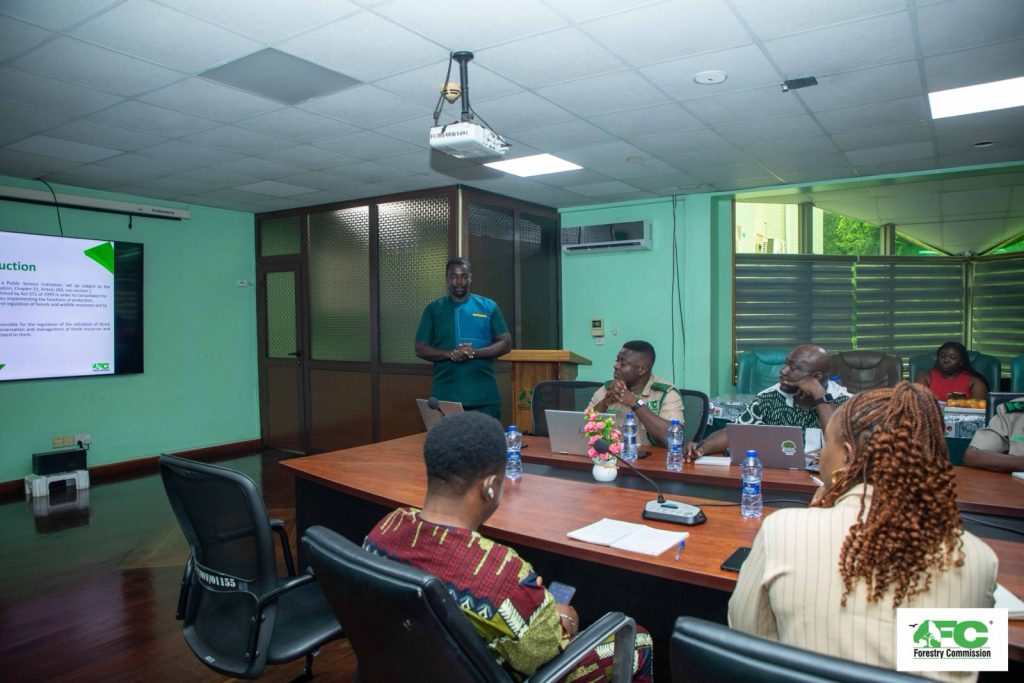
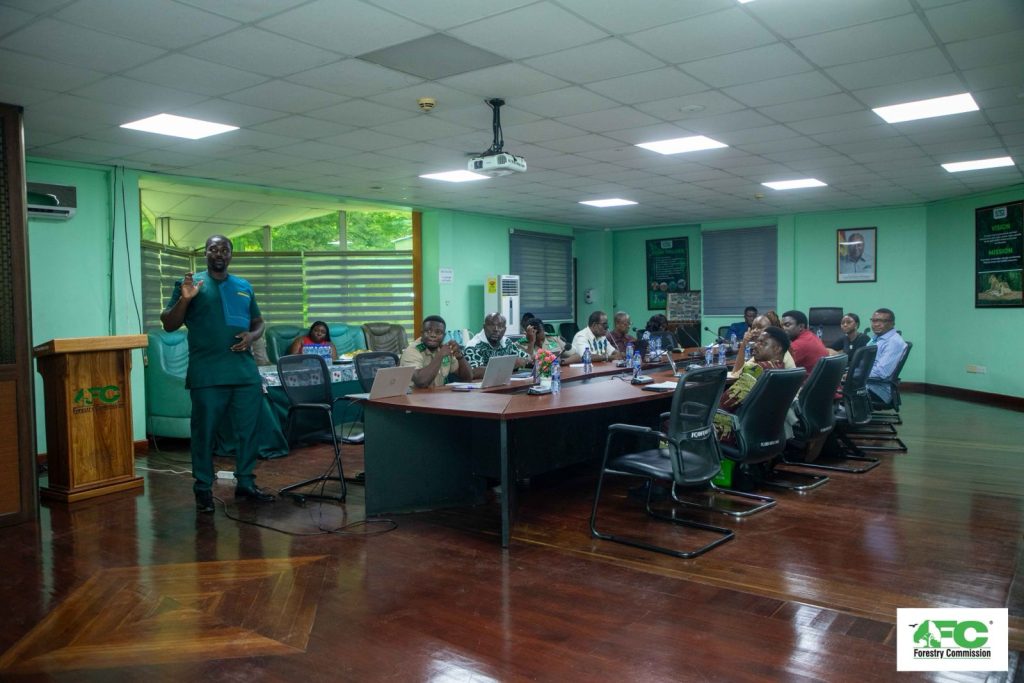
The opening session featured presentations from the FC, IDH Nigeria and the ESFC to provide participants with an overview of their respective mandates, programmes and experiences in landscape management.
Delivering the first presentation, Mr. Kwame Agyei, Manager, Plantation Investment and Extension at the Plantations Department of the Forest Services Division (FSD), highlighted the Forestry Commission’s legal mandate, organisational structure and strategic role in managing Ghana’s forest and wildlife resources. He explained that the FSD is responsible for protecting, developing and restoring the country’s forest resources through biodiversity conservation, plantation development, stakeholder engagement and livelihood improvement initiatives for forest fringe communities. He also outlined major interventions, including plantation establishment, Trees-on-Farms, enrichment planting, the Tree for Life Reforestation Initiative, the Ghana Cocoa Forest REDD+ Programme (GCFRP) and the Ghana Shea Landscape Emission Reductions Project (GSLERP). While acknowledging the progress made in restoring degraded landscapes, Mr. Agyei identified illegal mining, wildfires, inadequate funding, staffing gaps and logistical constraints as challenges to sustainable forest management.
Mr. Charles Sarpong Duah, Manager for Monitoring, Evaluation and Budgeting at the Climate Change Unit (CCU) of the FC, presented Ghana’s progress in implementing REDD+ and other climate change mitigation initiatives. He explained that the Unit has played a leading role in addressing the major drivers of deforestation through sustainable forest management and landscape-based governance. He highlighted the GCFRP’s participatory approach, which promotes community involvement through Community Resource Management Areas (CREMAs) and Hotspot Intervention Areas (HIAs), while ensuring transparent benefit-sharing mechanisms that support forest conservation, climate-smart agriculture and sustainable livelihoods.
Presenting on behalf of IDH Nigeria, Mr. Abraham Ogwu outlined the National Initiatives for Sustainable and Climate Smart Oil Palm Smallholders (NISCOPS) programme, which promotes sustainable and climate-smart oil palm production through integrated landscape management. He explained that the initiative seeks to increase productivity and farmer incomes, reduce deforestation, strengthen governance, promote gender inclusion and foster multi-stakeholder partnerships through Green Growth Plans and Production, Protection and Inclusion (PPI) Compacts.
Mrs. Esther Uwoghiren, Director of Forest Management and Utilisation at the ESFC shared the State’s experience in sustainable forest governance. She highlighted ESFC’s mandate, institutional reforms and strategic partnerships, noting that Edo State manages 49 forest reserves covering approximately 574,944 hectares. She also showcased key achievements, including the introduction of a log tracking system to curb illegal logging, the development of forest management plans, strengthened law enforcement measures and collaborations with partners such as IDH, Proforest, FC Ghana, and the Food and Agriculture Organization (FAO).
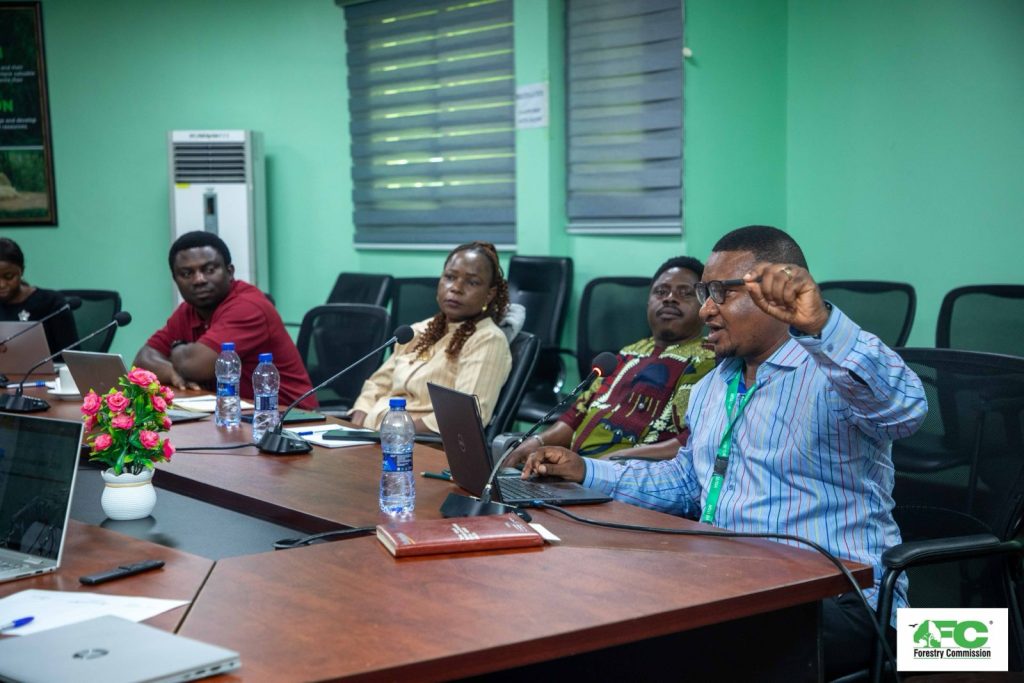
The presentations were followed by an interactive knowledge-sharing session during which participants exchanged experiences, discussed common challenges and explored practical approaches to improving landscape governance, forest restoration and community participation. The discussions marked the beginning of a week-long field programme designed to provide the delegation with first-hand experience of Ghana’s forest restoration and climate change initiatives.
During the field visits, the delegation toured MIRO Plantations in the Ashanti Region, visited the Atewa and Goaso landscapes to study the implementation of the CREMA model, and engaged with members of the Hotspot Intervention Area Landscape Management Board on governance and stakeholder collaboration. They also visited community-based restoration projects and a Modified Taungya System (MTS) site, where beneficiary farmers shared how the programme has improved their livelihoods through increased agricultural production, access to farmland and future timber revenue opportunities.
At a debriefing session held at the end of the visit, members of the delegation commended the Forestry Commission for its integrated approach to landscape restoration, community participation and sustainable forest management. They observed that the strong relationship between the FC and local communities had contributed significantly to the success of Ghana’s restoration initiatives and expressed interest in adapting several of the lessons learned to strengthen forest governance and landscape restoration efforts in Edo State.
Delivering the closing remarks on behalf of the Chief Executive of the FC, and the Ag. Executive Director of the Forest Services Division, Dr. Gordon Sarfo Adu. Mrs. Valerie Fumey Nassah, Director of Operations of the Plantations Department, expressed appreciation to the delegation for selecting Ghana as a learning destination. She reaffirmed the Commission’s commitment to strengthening partnerships and promoting continued collaboration in sustainable forest management and landscape restoration across the West African sub-region.
The engagement was attended by several officials of the FC, including Dr. Joseph Appiah -Gyapong, Acting Director of the CCU; Mrs. Joyce Ofori Kwafo, Manager of Corporate Affairs and Media Relations; Mr. Daniel Adu, Public Relations Manager, FSD; Mr. Samuel Asare, Assistant District Manager, Plantations Department; and Mr. Sampson Boateng Ofosu of the CCU’s Monitoring, Evaluation and Governance Team